How to Get to Agafay Desert from Marrakech [6 Options, 2026]
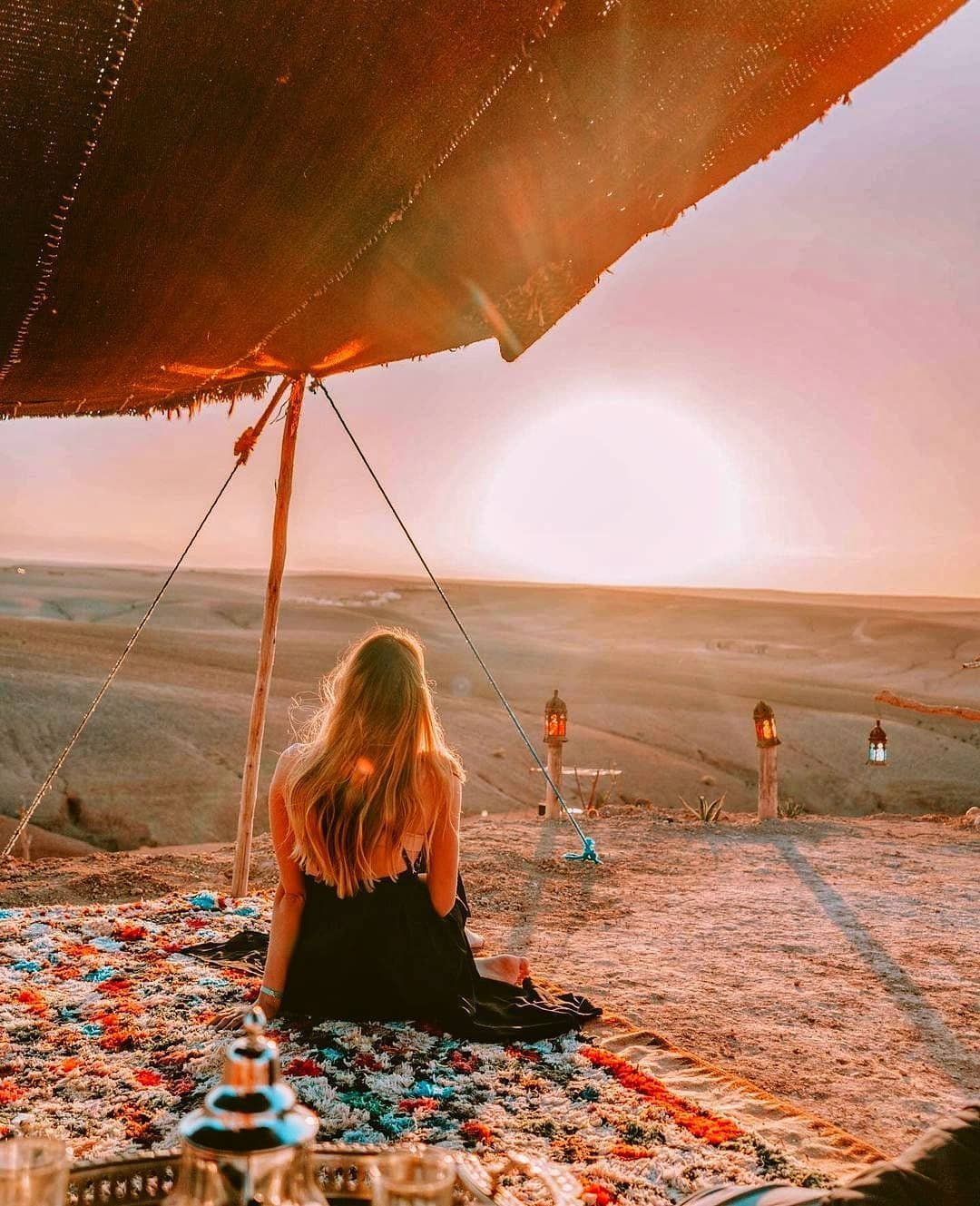
One of the best things about the Agafay Desert is how easy it is to reach from Marrakech. At just 35 km southwest of the city, you can be standing in a lunar-like desert landscape in under an hour. But the “how” matters — the wrong choice can cost you double or leave you stranded at a camp entrance at midnight.
After years of ferrying friends, family, and readers to Agafay, here’s every transport option laid out with real prices, pros, cons, and the mistakes to avoid.
Quick Comparison Table
| Option | Cost (MAD) | Cost (EUR) | Ease | Best For |
|---|---|---|---|---|
| Private taxi | 400–600 round trip | €37–€55 | Easy | Couples, small groups |
| Tour with transport | 250–1,500/person | €23–€140 | Easiest | First-timers, solo travelers |
| Private transfer | 350–500 each way | €32–€46 | Easy | Reliability, comfort |
| Rental car | 300–500/day + fuel | €28–€46 | Moderate | Independent travelers |
| Camp shuttle | 0–400/person | €0–€37 | Easy | Those booking overnight |
| Public transport | 20–50 + taxi | €2–€5 + taxi | Difficult | Extreme budget |
Option 1: Private Taxi (Most Popular)
This is how most visitors get to Agafay, and it’s what I recommend for most people.
How it works: Negotiate with a taxi driver in Marrakech for a round trip to Agafay with waiting time (if day trip) or a one-way drop-off (if staying overnight).
Cost: 400–600 MAD (€37–€55) for a round trip with 2–4 hours of waiting time. One-way is 200–350 MAD (€18–€32).
How to find one: Ask your riad or hotel to arrange a trusted driver — this is by far the safest and most reliable approach. They have established relationships with drivers and can negotiate fair prices. You can also find taxis at Jemaa el-Fnaa or outside major hotels.
Critical rules:
- Always agree on the price BEFORE getting in. Write it down or text it to yourself. No surprises.
- Specify round trip vs. one way and clarify waiting time if applicable.
- Confirm the driver knows which camp you’re going to. The desert is big and camps are spread out — “take me to Agafay” isn’t specific enough.
- Get the driver’s phone number so you can call when you’re ready to leave.
Pros: Flexible timing, direct door-to-door, affordable for 2+ people. Cons: Requires negotiation skills. Some drivers may not know exact camp locations. Quality varies.
Option 2: Organized Tour with Transport
How it works: Book a day trip or overnight tour that includes pickup from your accommodation, transport to Agafay, activities, meals, and return.
Cost: 250–1,500 MAD (€23–€140) per person depending on the package. Shared tours start around 250 MAD; private tours from 500 MAD per person.
Where to book:
- GetYourGuide — widest selection with verified reviews, free cancellation
- Viator — similar options
- High Atlas Hiking — my recommendation for private groups
- Local agencies in the Marrakech medina (negotiate prices, but verify reviews)
Pros: Everything handled for you — zero stress. Best for solo travelers (shared tours) or first-timers. Often best overall value since transport + activities + meals are bundled. Cons: Less flexibility. Shared tours run on fixed schedules. You’re on someone else’s timeline.
My tip: If you’re 4+ people, a private tour costs roughly the same per person as a shared one but gives you complete flexibility.
Option 3: Private Transfer Service
How it works: Book a professional driver through a transfer company. They handle pickup, drop-off, and (for day trips) waiting time. More reliable and comfortable than a random taxi.
Cost: 350–500 MAD (€32–€46) each way. Some companies offer round-trip packages at a discount.
Companies I trust:
- Kasbah Transfers — this is what I personally use. Reliable, professional, English-speaking drivers.
- Your camp’s recommended transfer service — many camps have partnerships with specific drivers and can arrange transport as part of your booking.
Pros: Professional, reliable, comfortable vehicles. Driver knows exactly where every camp is. No negotiation needed. Cons: More expensive than a taxi. Need to book in advance.
Option 4: Rental Car (Self-Drive)
How it works: Rent a car in Marrakech and drive to Agafay yourself.
Cost: 300–500 MAD (€28–€46) per day for the rental, plus fuel (~50 MAD round trip). Total: about 350–550 MAD.
The route: Head south from Marrakech on the N8 toward Amizmiz/Taroudant. After about 25 km, follow signs to Agafay (or your specific camp). The main roads are paved and in good condition. Only the last stretch to some camps may be unpaved but is manageable in a regular car — you don’t need a 4x4.
Essential: Download offline maps (Google Maps or Maps.me) before you leave Marrakech. Phone signal drops once you enter the desert, and signage is limited on secondary roads. Input your specific camp’s GPS coordinates, not just “Agafay Desert.”
Pros: Complete flexibility. Can explore at your own pace. Good option if you’re also driving to other destinations. Cons: Requires comfort with driving in Morocco (traffic in Marrakech is intense). Last-mile navigation can be tricky. Parking at camps varies.
Driving tip: Moroccan driving style is… assertive. If you’re not comfortable with roundabouts, motorbikes weaving, and occasional donkey carts, stick with a taxi or transfer.
Option 5: Camp Shuttle
How it works: Some luxury camps offer their own shuttle service for guests booking overnight stays.
Cost: Free to 400 MAD per person, depending on the camp. Some include it in the room rate; others charge separately.
How to arrange: Ask when booking your camp. Shuttles typically depart from a central Marrakech location at set times (usually 2–4pm) and return the next morning (10–11am).
Pros: Included or discounted with your stay. No logistics to worry about. Cons: Fixed schedule. Not available at all camps. Usually only for overnight guests.
Option 6: Public Transport (Budget)
How it works: Take a bus or grand taxi from Marrakech to a nearby village (Tameslohte is the closest with regular service), then arrange further transport from there.
Cost: 20–50 MAD (€2–€5) for the bus/grand taxi, plus 100–200 MAD for a local taxi to your camp.
Reality check: This is doable but inconvenient. Services are infrequent, the last leg from the village to the camp requires local knowledge, and returning at night (after dinner) is difficult without prearranged transport. I only recommend this for very budget-conscious travelers with flexible schedules and some French or Arabic language skills.
Pros: Cheapest option by far. Cons: Unreliable schedules. Difficult return at night. Stressful if you don’t speak French or Arabic.
The Route: What to Expect on the Drive
Don’t sleep through the journey — it’s genuinely beautiful.
The first 15–20 minutes take you through Marrakech’s urban sprawl: busy streets, roundabouts, construction. Once you clear the city, the landscape starts transforming. You’ll pass through olive groves and small rural villages, see farmers working fields, spot the occasional donkey cart.
Around the 25-minute mark, the terrain starts to change. The green fades. The earth turns ochre. Rocky hills appear on the horizon. By 35–40 minutes, you’re entering the Agafay plateau — an otherworldly landscape of stone desert stretching toward the Atlas Mountains.
Road conditions: The main roads (N8 and regional roads) are paved and well-maintained. The local authorities have been investing in infrastructure to support Agafay’s growing tourism. The final 2–5 km to most camps may be on unpaved but graded roads — bumpy but fine in any car.
Road improvements: During recent visits, I noticed ongoing road work that’s making access even easier. The route gets better every year.
Tips for a Smooth Journey
-
Always arrange return transport BEFORE you go. This is the #1 mistake visitors make. You don’t want to be stuck in the desert at 11pm without a ride back.
-
Give your driver the camp’s EXACT name and GPS coordinates. “Take me to Agafay” will get you to the general area but not to your specific camp.
-
Save your driver’s phone number. You’ll need it to coordinate pickup, especially for day trips.
-
Carry cash in MAD. You’ll need it for the taxi and tips. ATMs don’t exist in the desert.
-
Leave Marrakech by 2–3pm for sunset trips. Factor in Marrakech traffic, which can add 15–20 minutes to your departure.
-
Download offline maps. Phone signal is weak or nonexistent in the desert.
-
Bring a light for the return. If you’re returning after dark (most evening experiences end at 10–11pm), the desert roads have no street lighting.
FAQs
Do I need a 4x4 to reach Agafay? No. The main roads are paved. The last stretch to some camps is unpaved but manageable in a regular car.
How long is the drive? 40–60 minutes from central Marrakech, depending on traffic and your specific camp’s location.
Can I take an Uber or InDrive? Ride-hailing apps exist in Marrakech but drivers are generally unwilling to go to Agafay (it’s outside their usual zone and they may not get a return fare). Stick with a prearranged taxi or transfer.
Is driving in Morocco safe? Yes, but it requires confidence. Marrakech traffic is chaotic, and rural roads may have unexpected obstacles (animals, slow vehicles). If you’re comfortable driving in Mediterranean or Middle Eastern cities, you’ll be fine.
What if my camp is hard to find? Call the camp when you’re 15 minutes away. Most camps will send staff to guide you through the last stretch, or direct your driver by phone.
Can I combine the trip to Agafay with other stops? The road to Agafay passes near Lalla Takerkoust Lake and isn’t far from the start of the Ourika Valley route. You can combine, but don’t try to cram too much into one day — you’ll enjoy nothing properly.
Questions about getting to Agafay? Drop them in the comments — I’ve done this drive more times than I can count!
Read next: