Is Casablanca Safe? Honest Safety Guide From a Local Resident (2026)
I’ve been living in Casablanca since 2013. That’s over a decade of navigating this city every single day — walking its streets alone at night, taking taxis at odd hours, shopping in its markets, raising a family here. So when people ask me “Is Casablanca safe?” I don’t give them a travel brochure answer. I give them the truth.
The short answer: yes, Casablanca is generally safe for tourists. The longer answer is more nuanced, and that’s what this guide is for. I’m going to tell you exactly what to expect, which neighborhoods feel safe and which to avoid, how to handle the scams that do exist, and what it’s really like as a woman living in Morocco’s largest city.
The Honest Truth About Safety in Casablanca
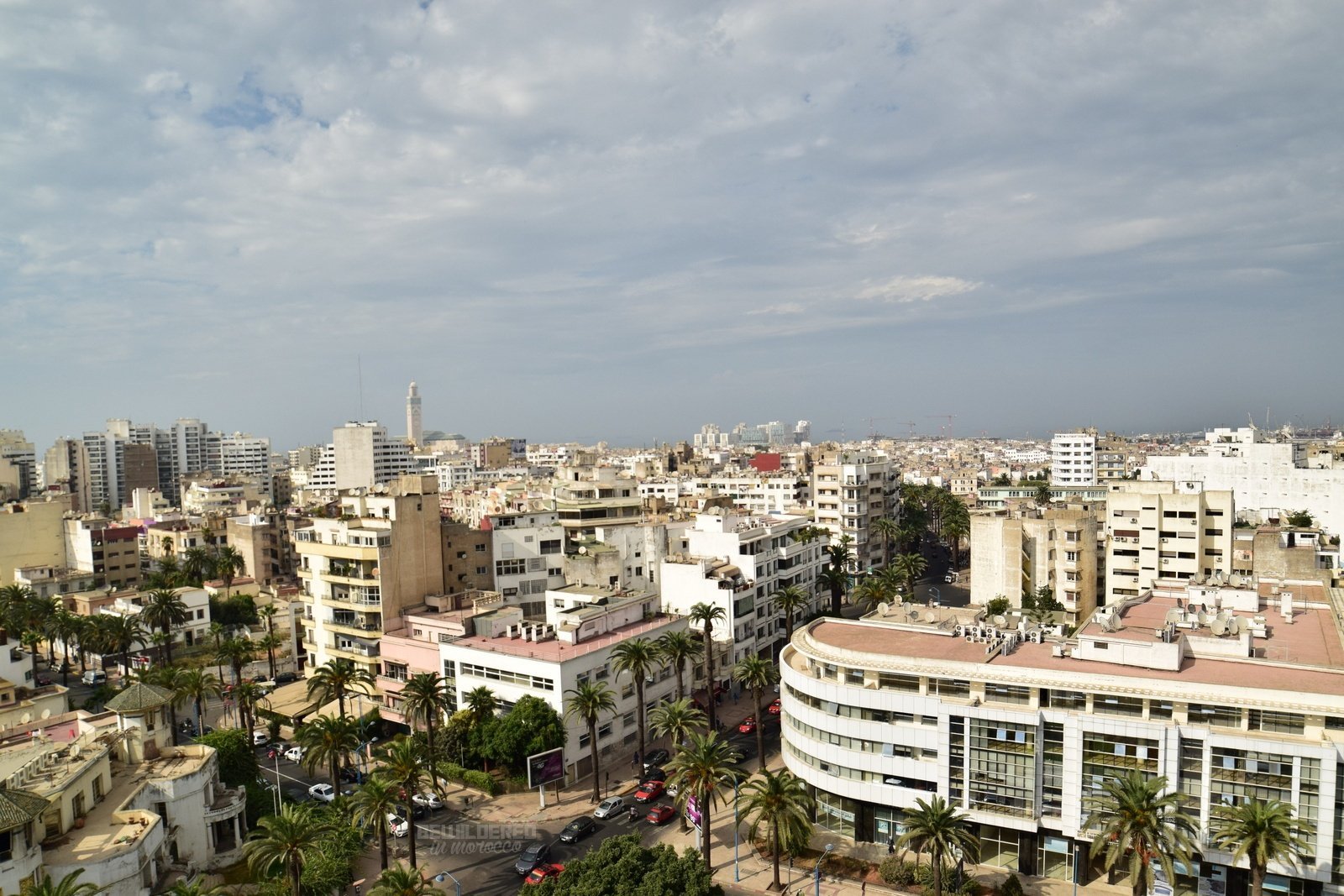
Casablanca is a working city of nearly 4 million people. Unlike Marrakech or Fes, tourism isn’t the main industry here — this is Morocco’s economic capital, where people go to work, do business, and live their lives. That actually works in your favor as a visitor: you’re not surrounded by the kind of tourist-targeting hassle that’s more common in heavily visited cities.
Violent crime against tourists is rare. In over a decade of living here, I have never personally experienced or witnessed a violent incident targeting a foreigner. The police presence in tourist areas — around the Hassan II Mosque, the Corniche, downtown — is visible and reassuring.
The real risks are the same ones you’d face in any major city: pickpocketing in crowded areas, phone snatching (especially from mopeds), taxi drivers who “forget” to turn on the meter, and occasional street scams. None of these are unique to Casablanca. If you’ve navigated Barcelona, Istanbul, Rome, or Cairo, you’ll do just fine here.
Safe Neighborhoods: Where to Stay and Explore
Not all parts of Casablanca are created equal. Here are the neighborhoods I recommend for visitors, ranked by how comfortable and safe they feel:
Maarif — My Personal Favorite
I lived in Maarif for two years and it felt like home. It’s lively, welcoming, and walkable, with excellent shops and restaurants everywhere. The buildings are mostly modern and well-maintained. People are open-minded and friendly. I’d walk around Maarif alone in the evening without a second thought. This is where I tell friends to stay.
Gauthier, Racine & Palmiers (Triangle d’Or)
This is the upscale expat area. Lots of French residents, good gyms, beauty salons, international schools, and trendy cafés. The streets are clean and well-lit. Very safe day and night.
Anfa
A beautiful residential neighborhood near the ocean, popular with families. If you’re visiting Casablanca with children, Anfa is an excellent base — it’s safe, quiet, and close to the Corniche and Morocco Mall.
Read my detailed guide to Casablanca neighborhoods for a full breakdown of every district.
The Corniche & Ain Diab
The waterfront promenade is well-patrolled and busy with families and joggers, especially in the evenings. The beach clubs and restaurants along here are safe and popular with locals.
City Center (around Mohammed V Square)
Busy during the day, quieter at night. Safe for walking during daylight hours and early evening. The downtown area has a visible police presence. I wouldn’t wander the side streets alone very late at night, but the main boulevards feel fine.
Areas to Be Cautious About
I want to be honest without being alarmist. These aren’t “dangerous” in the way some travel blogs make them sound, but they’re areas where a tourist would feel out of place and where extra caution is warranted:
- Sidi Moumen: A working-class district far from the tourist trail. There’s no reason for a visitor to go here, and it’s not somewhere you’d want to wander.
- Hay Mohammadi: Another residential area that’s best avoided by tourists, especially after dark.
- Old Medina at night: During the day, the Old Medina is perfectly fine to explore. But after dark, the narrow alleys are poorly lit, and I wouldn’t recommend solo wandering.
- Industrial zones (Ain Sebaa, parts of Derb Sultan): These are working areas with nothing to see as a tourist. Stick to the neighborhoods listed above and you’ll be fine.
Common Scams and How to Avoid Them
In over a decade here, I’ve seen every trick. Here are the most common ones tourists encounter:
The “mosque is closed” scam. This is the most common one. Someone will approach you outside the Hassan II Mosque and tell you it’s closed today, or that you need a “special guide.” They’ll then offer to take you somewhere else. Ignore them completely. Walk directly to the official ticket office at the mosque.
The helpful stranger. Someone offers to “help” you find your hotel, a restaurant, or an attraction. They walk with you, chat friendly, and then demand payment at the end. The best response is a polite but firm “La, shukran” (No, thank you) and keep walking.
Taxi meter games. Some taxi drivers will claim the meter is “broken” or simply not turn it on, then charge you several times the real fare. The fix is simple: insist on the meter before you get in. If they refuse, close the door and flag the next taxi.
The snake/monkey photo. Less common in Casablanca than in Marrakech, but it happens. Someone places a snake or monkey on your shoulder, takes a photo, then demands money. Just say no firmly and walk away.
Market overcharging. In souks and markets, the first price quoted to a tourist is typically 2–3 times the real price. Negotiate politely, and don’t be afraid to walk away — it’s actually the most powerful negotiation tool.
My golden rule: trust your instincts. If someone’s being overly friendly and you didn’t initiate the conversation, there’s usually a motive. Casablancans are warm and welcoming people, but genuine friendliness doesn’t come with strings attached.
Is Casablanca Safe for Women?
This is the question I get asked more than any other, and I want to answer it with complete honesty as a European woman who has lived here for over a decade.
Casablanca is one of the more liberal and modern cities in Morocco. Women work in offices, run businesses, sit in cafés alone, and go out at night. Compared to some smaller or more conservative Moroccan cities, Casablanca feels noticeably more relaxed in terms of gender dynamics.
That said, street harassment exists. Catcalling, staring, and unsolicited comments from men happen, particularly in crowded areas. It’s usually more annoying than threatening, but I won’t pretend it doesn’t exist. After years of living here, I’ve learned to ignore it completely — no eye contact, no response, just keep walking with purpose. It usually stops immediately.
Practical tips for women:
- Dress modestly, not because you have to, but because it helps. Covering your shoulders and knees significantly reduces unwanted attention.
- Walk with confidence. Looking like you know where you’re going is the single most effective way to avoid hassle.
- Use Careem at night. Rather than hailing a taxi from the street after dark, use the Careem app. The price is fixed, the driver’s identity is tracked.
- In cafés, sit in the family section if there is one. Modern cafés and restaurants in Maarif, Gauthier, and the Corniche are completely comfortable for women alone.
- Eating alone is totally fine in modern restaurants and cafés. Nobody will bat an eye.
- Avoid isolated streets after dark. Stick to busy, well-lit areas.
Read more about solo female travel in Casablanca.
Here’s the bottom line: I’ve walked the streets of this city for over a decade as a blonde European woman. I’ve felt uncomfortable at times, yes. But I’ve never felt genuinely unsafe. Casablanca is far from the horror stories some travel blogs paint. Use common sense, follow the tips above, and you’ll be fine.
Is Casablanca Safe for Solo Travelers?
Absolutely. Casablanca is actually one of the easier Moroccan cities for solo travelers because it’s so modern and well-connected. The train system is reliable and safe. Taxis (with the meter!) are cheap and plentiful. The main tourist sites are in safe areas with visible security.
Solo travelers should take the same precautions as in any major city: don’t flash expensive electronics on the street, keep your phone in a secure pocket or crossbody bag, and stay aware in crowded places.
Solo traveler tip: Download Careem (the local ride-hailing app) and Google Maps before you arrive. Having reliable transport at your fingertips makes solo navigation much easier, especially at night or when you’re tired.
Getting Around Safely
Taxis: Casablanca’s red petit taxis are everywhere and generally safe. A ride within the city center costs 15–30 MAD with the meter running. Always insist on the meter. From the airport, the official taxi fare to the city center is around 250–300 MAD; agree on the price before getting in, or take the airport train instead.
Tram: The tramway is clean, modern, and safe. Be aware of your belongings during rush hour, as pickpocketing can happen on crowded trams — just like on the Metro in Paris or Barcelona.
Train: The ONCF train from the airport to Casa-Voyageurs station is the safest and most reliable airport transfer. Intercity trains (to Marrakech, Rabat, Fes) are comfortable, safe, and a wonderful way to travel Morocco.
Driving: I’ll be honest: driving in Casablanca is an experience. Moroccan driving style is creative. If you’re not used to it, I’d recommend taxis or Careem instead.
Is Casablanca Safe at Night?
The tourist-friendly areas — Corniche, Maarif, Gauthier, Anfa, and around major hotels — are active and safe in the evening. Restaurants and cafés are open late, families stroll the Corniche, and there’s a pleasant buzz to the city after dark.
Where I’d be more cautious: the Old Medina after dark, empty side streets in the city center, and any area that’s poorly lit with nobody around. This is common-sense advice that applies to any city in the world, not a Casablanca-specific warning.
If you’re going out for dinner or to a bar in the evening, use Careem for your ride home rather than walking through unfamiliar streets.
Emergency Contacts
Save these numbers in your phone before you arrive:
| Service | Number / Details |
|---|---|
| Police | 19 |
| Ambulance / Medical Emergency | 15 |
| Fire | 15 |
| Tourist Police | Available at major tourist sites — look for uniformed officers near Hassan II Mosque, Corniche, Old Medina |
| Taxi App (Careem / inDrive) | Download before your trip — safer than hailing taxis at night |
| US Consulate Casablanca | +212 522 642 000 |
| Main Hospitals | Clinique Ghandi, Clinique Ibn Tofail, CHU Ibn Rochd (public) |
Health tip: Casablanca has the best medical infrastructure in Morocco. If you need a pharmacy, look for the green cross signs — many stay open until midnight along major boulevards like Boulevard d’Anfa. For serious medical issues, private clinics generally provide faster and better care than public hospitals.
FAQs
Is Casablanca safe for tourists? Yes. Violent crime against tourists is rare and the police presence in tourist areas is visible. The real risks are the same as in any major city: pickpocketing in crowded areas, phone snatching and occasional street scams.
Is Casablanca safe for solo female travellers? Yes, with sensible precautions. Casablanca is one of the more liberal cities in Morocco, where women work, run businesses and go out in the evening. Street harassment such as catcalling does exist and is usually more annoying than threatening. Dressing modestly, walking with confidence and using a ride-hailing app at night all help significantly.
Is Casablanca safer than Marrakech? In some ways yes. Casablanca has fewer tourist-targeting scams because tourism is not the main economy, so you are less likely to be approached by touts or fake guides. On the other hand it is a bigger city with more typical urban issues such as pickpocketing and traffic. Both cities are safe with basic precautions.
Which areas of Casablanca should tourists avoid? Sidi Moumen and Hay Mohammadi are working-class districts with nothing to offer visitors. The Old Medina is fine during the day but the narrow alleys are poorly lit after dark. Industrial zones are best avoided. Maarif, Gauthier, Anfa, the Corniche and the city centre are all comfortable for visitors.
What are the most common scams in Casablanca? The most common is someone claiming the Hassan II Mosque is closed and offering to take you elsewhere. Others include the helpful stranger who demands payment after giving directions, taxi drivers who claim the meter is broken, and heavy overcharging in markets. Insisting on the taxi meter and politely declining unsolicited help handles almost all of them.
Is Casablanca safe at night? The Corniche, Maarif, Gauthier, Anfa and areas around major hotels are active and safe in the evening. Avoid the Old Medina after dark and empty, poorly lit side streets. Using a ride-hailing app rather than walking through unfamiliar areas is the simplest precaution.
Is tap water safe to drink in Casablanca? Locals drink tap water and it is generally considered safe. Most visitors and expats stick to bottled water to avoid any stomach adjustment. Bottled water is cheap and available everywhere.
After more than a decade in Casablanca, here’s what I know: this city is a lot safer than the internet would have you believe. It’s a massive, modern, working city with the same mix of wonderful and frustrating moments that any city this size has. It’s not perfect — the traffic is chaotic, the occasional scam is annoying, and yes, street harassment exists. But dangerous? No. Not for a visitor who uses common sense.
The Casablanca I know is a city of warm people, incredible food, stunning architecture, and an Atlantic coastline that takes your breath away. Don’t let fear keep you from experiencing it.
Have questions about safety in Casablanca? Drop them in the comments — I answer everything from personal experience, not from a guidebook.
Ready to explore? Read my complete guide to things to do in Casablanca, or if you’re still deciding, here’s my honest take on whether Casablanca is worth visiting. Planning to visit the Hassan II Mosque? Here’s everything you need to know.