
When a country sits where Africa touches Europe, where the Atlantic crashes into the Mediterranean, and where ancient medinas stand next to modern tech hubs — people are going to talk. And right now, why everyone is talking about Morocco comes down to something simple: this country delivers experiences that go far beyond the postcards.
I've crossed this country from the Rif Mountains in the north to the edge of the Sahara in the south, and every single time, Morocco finds a way to surprise me. A new hidden valley. A dish I've never tasted. A conversation with a craftsman whose family has worked the same copper for generations. Morocco never reveals itself all at once — and that's exactly what makes it so addictive.
The Sahara Desert: Where Silence Has a Sound
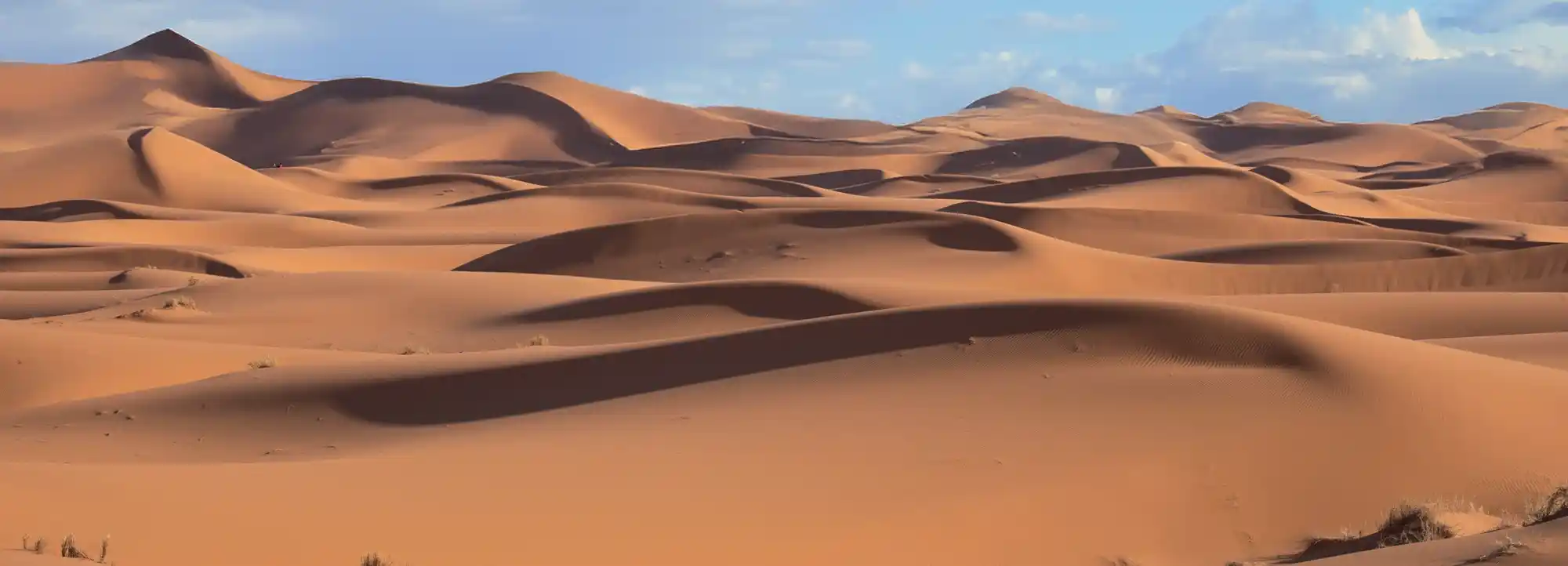
The Sahara covers 9 million square kilometers, but Morocco holds one of its most spectacular corners — Erg Chebbi near Merzouga. These dunes rise 150 meters high, stretching 22 kilometers from north to south. At sunrise, photographers fly in from around the world to watch shadow and light paint the sand in impossible gradients.
Walking on these dunes is unlike anything you'll experience elsewhere. Your feet sink with each step. Temperatures can reach 50°C in summer and drop to freezing at night. Yet life thrives here — fennec foxes, sand vipers, scarab beetles, all perfectly adapted to extremes.
Berber nomads navigate these sands by stars, by wind patterns, by the shape of dunes. Their black tents still dot the landscape, and camel caravans still carry dates and salt along routes that haven't changed in centuries.
If you make it to M'Hamid, the last town before the Algerian border, you can sleep under a billion stars in a desert camp. The silence is so deep it feels sacred.
The Atlas Mountains: Morocco's Backbone
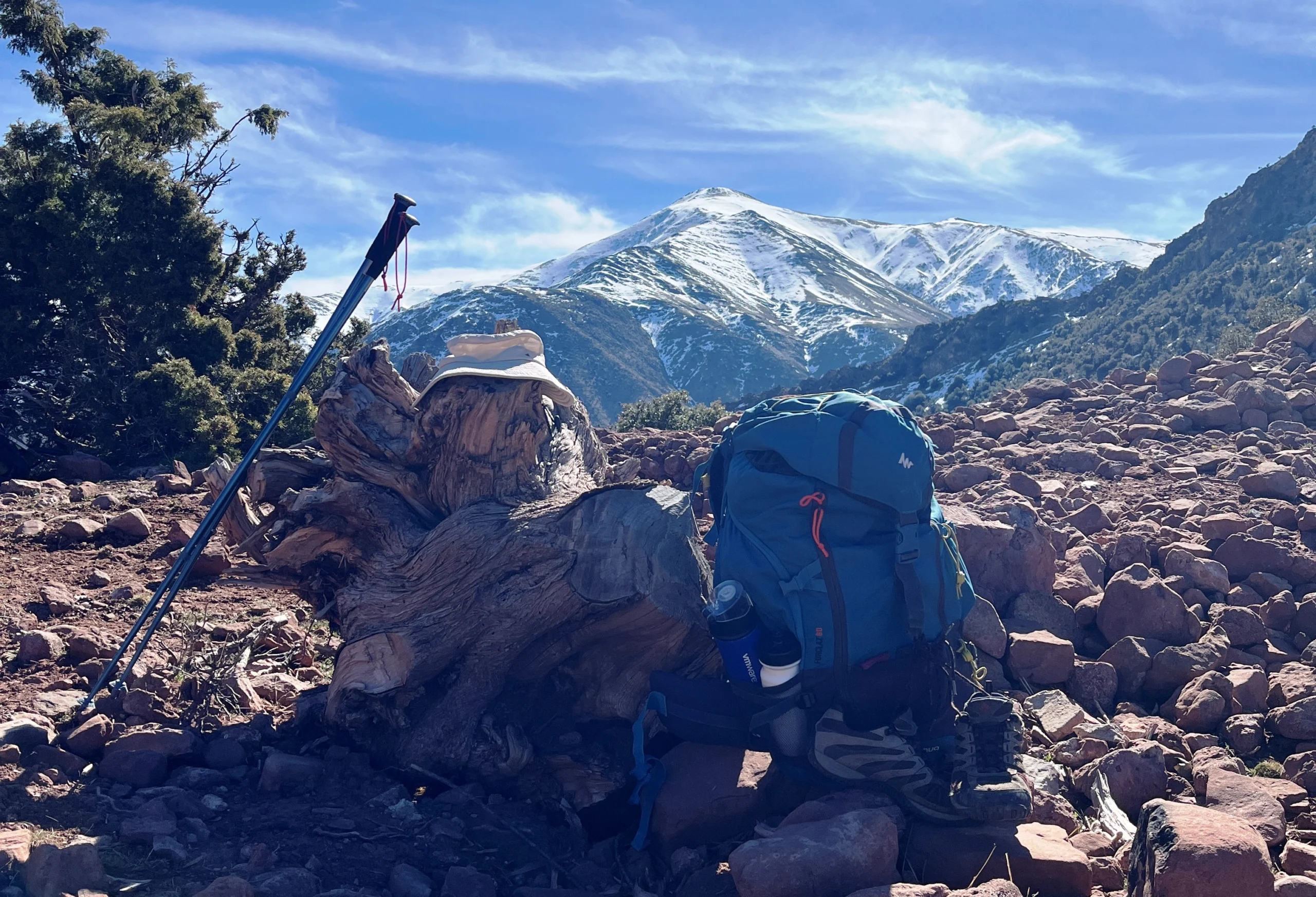
Three mountain ranges cross Morocco like a spine — the High Atlas, Middle Atlas, and Anti-Atlas. Together, they separate the coastal plains from the desert and serve as Morocco's water tower, feeding rivers that irrigate the entire country.
Toubkal, standing at 4,167 meters, is North Africa's highest peak. The two-day climb passes through Berber villages where life has kept its own pace for centuries — houses built from red mud and stone, terraced fields carved into steep slopes.
Then there's Ait Benhaddou, a fortified village so cinematic that Hollywood couldn't resist it. Gladiator, Game of Thrones, Lawrence of Arabia — all filmed here. But real families still live in these kasbahs, hanging laundry where warriors once stood guard.
And if you think Morocco is all desert heat, drive two hours to Ifrane in the Middle Atlas. They call it "Little Switzerland" — alpine architecture, clean streets, even ski resorts. The contrast is honestly jarring, and I love it.
Why Everyone Is Talking About Morocco's Imperial Cities
Morocco's imperial cities — Fez, Marrakech, Meknes, and Rabat — are where history comes alive under your feet.

Fez el Bali is the world's largest car-free urban zone: 9,000 twisting alleys, 200,000 people living inside medieval architecture. Walking here is like stepping into the 11th century. The famous tanneries still operate exactly as they did a thousand years ago — workers standing waist-deep in vats, treating hides by hand. The smell is intense, but the leather produced here carries the world-famous stamp "Made in Fez." The city has 800 mosques and 9,000 workshops where artisans hammer copper, weave silk, and paint ceramics in spaces their grandfathers used.
Marrakech, founded in 1062, is pure energy. Jemaa el-Fnaa square — a UNESCO masterpiece of oral and intangible heritage — explodes with life every single day. Snake charmers and storytellers by morning, grilled merguez and Gnawa musicians by night. The souks sprawl over 5 square kilometers, each section specialized in textiles, leather, or metalwork. And bargaining? That's theater. The merchant quotes three times the price. You counter with a third. Mint tea appears. Twenty minutes later, you agree on a number you both knew from the start.
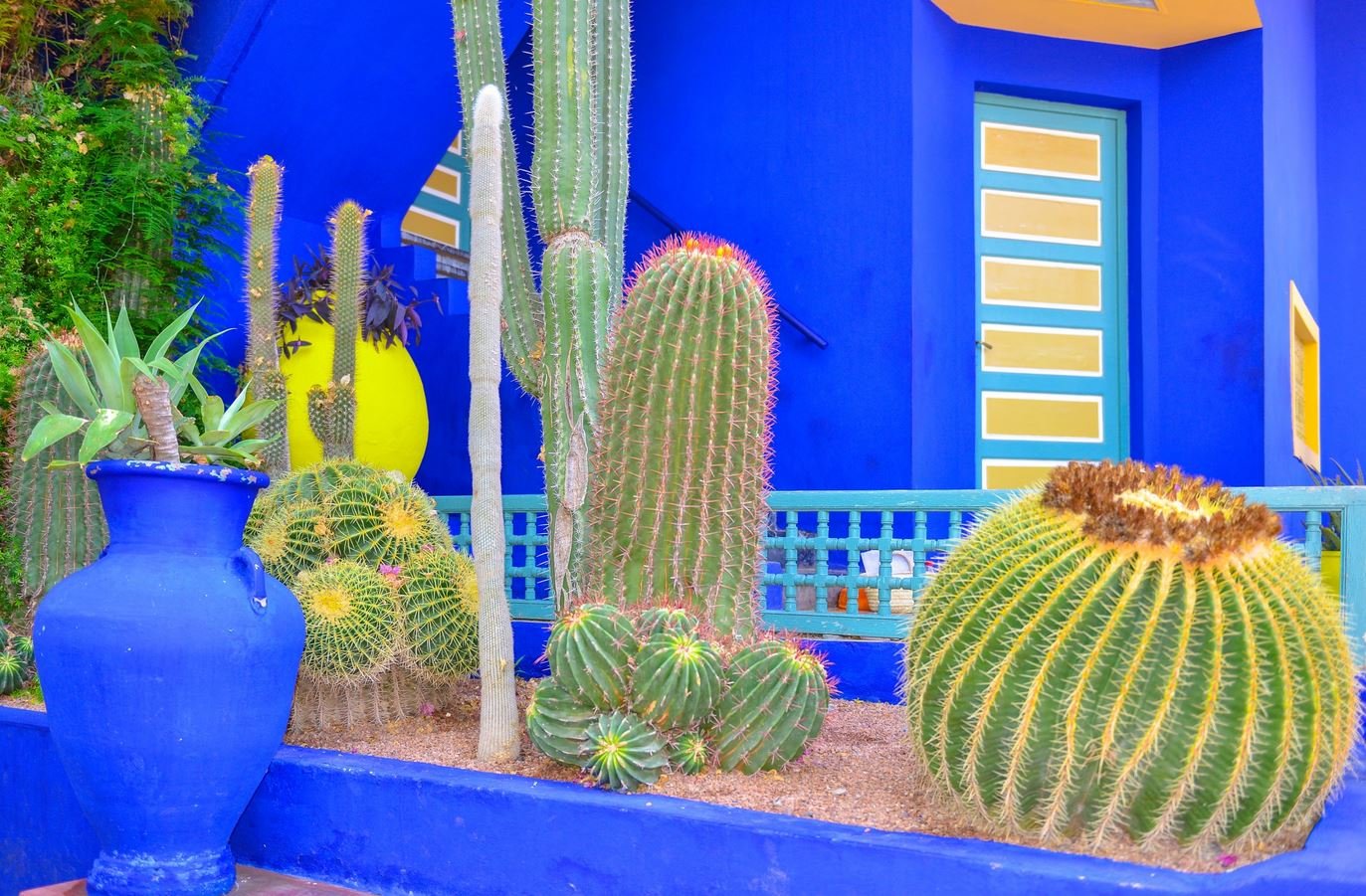
Don't miss Jardin Majorelle — created by French painter Jacques Majorelle in the 1920s and later saved by Yves Saint Laurent. Those cobalt blue buildings surrounded by bamboo groves and cacti from five continents are something special.

Meknes dreamed of rivaling Versailles, and the scale is staggering — royal stables that once housed 12,000 horses, and Bab Mansour, Morocco's largest gate. Rabat, the modern capital, holds the unfinished Hassan Tower — a monument to ambitious incompletion — and the peaceful Kasbah of the Udayas overlooking the Atlantic.
Two Coasts, Two Worlds
Morocco faces two seas, and each coastline tells a completely different story.

On the Atlantic side, Essaouira is all white and blue — Portuguese fortifications, fishing boats in primary colors, and a wind that never stops (they call it the City of Wind). Windsurfers and kitesurfers love it. Every morning the fishing fleet returns, merchants bid, and by 9 a.m. the catch is already distributed across the city. Fresh sardines, sea bream, prawns — eaten the same day.
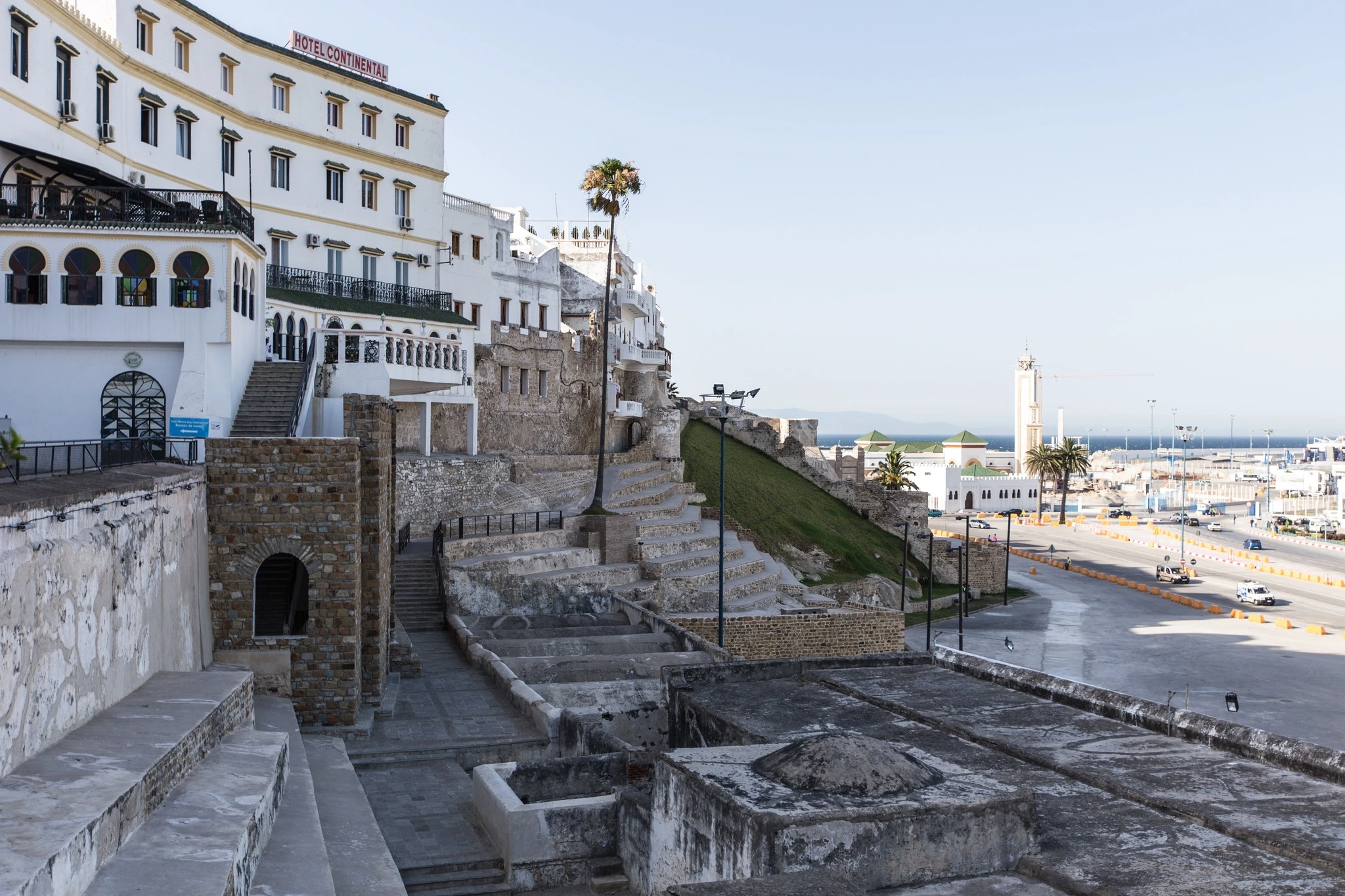
On the Mediterranean, Tangier sits at Africa's northern tip. On a clear day, you can see Spain just 14 kilometers across the Strait of Gibraltar. This city has been claimed by Venetians, Romans, Arabs, Portuguese, British, Spanish, and French. Writers like Paul Bowles and Tennessee Williams lived here, drawn by its ambiguous identity.
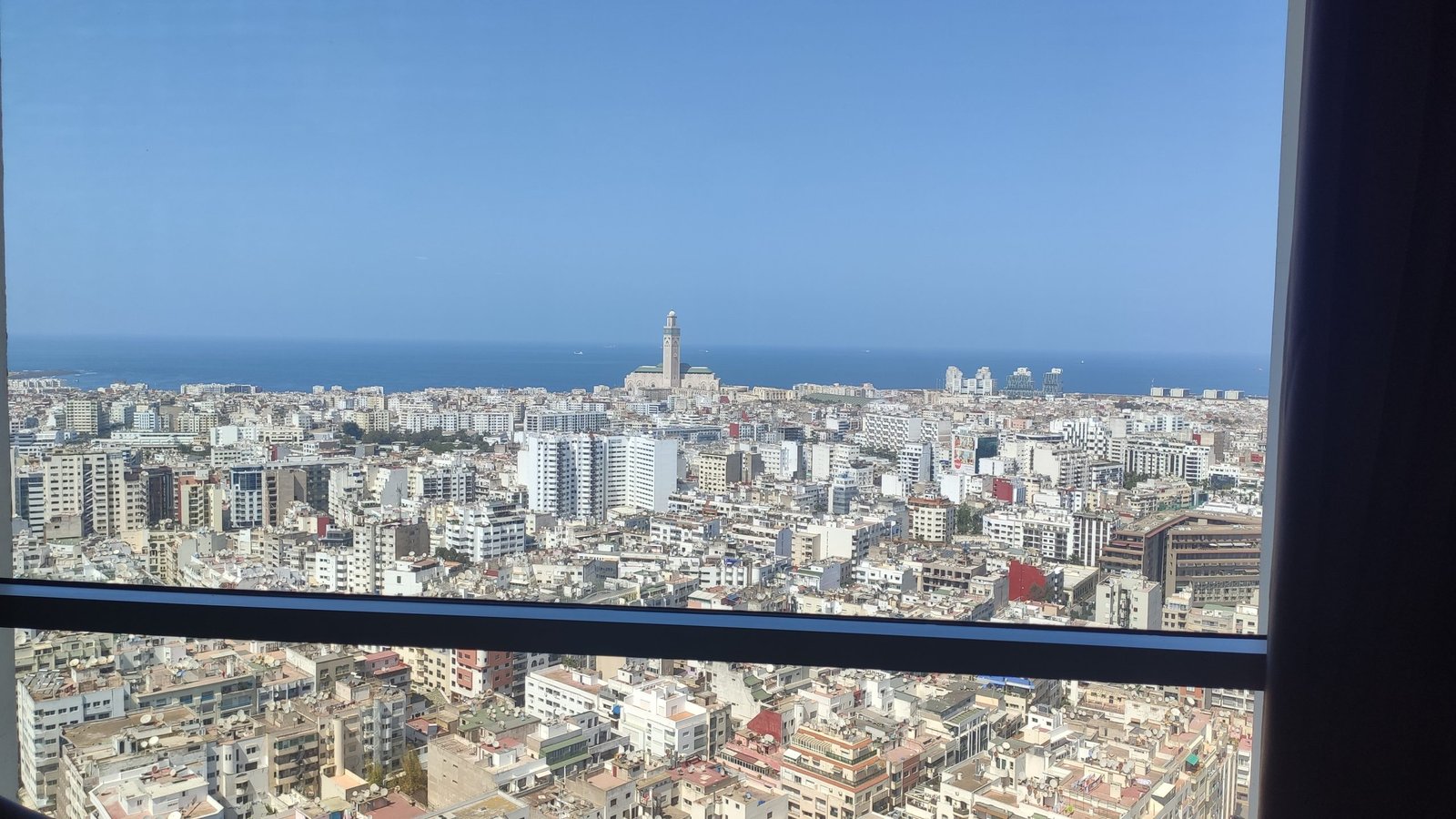
And then there's Casablanca — 5 million people, Morocco's economic engine. The Hassan II Mosque alone is worth the visit: its minaret rises 210 meters (the tallest in the world), the prayer hall holds 25,000, and the courtyard fits another 80,000. Built partly over the Atlantic with glass floors revealing the ocean below, it took 60 million hours of handmade labor to complete.
Chefchaouen: Stepping Into a Painting
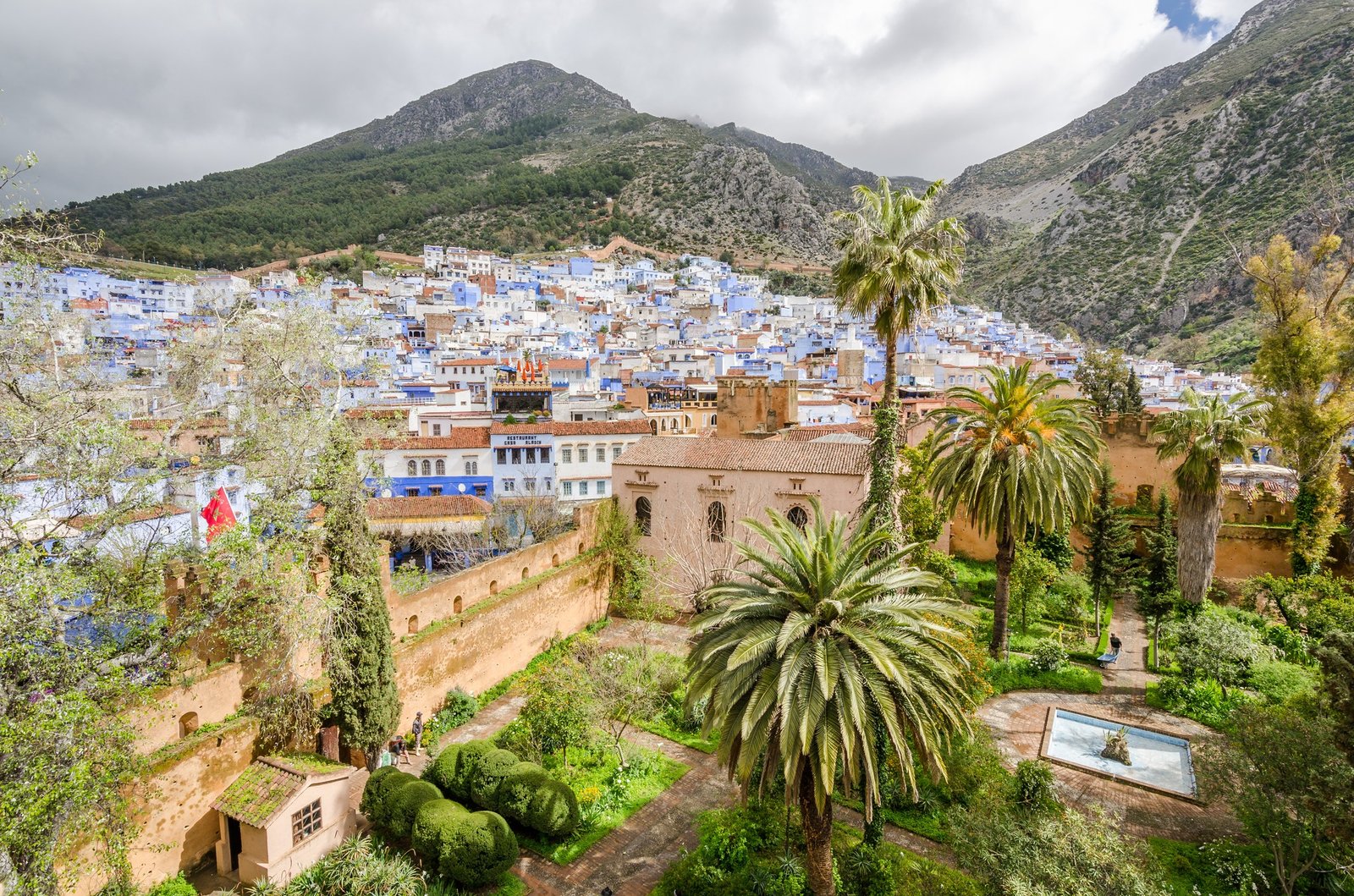
Two hours south of Tangier, tucked into the Rif Mountains, Chefchaouen rises in every shade of blue — sky blue, powder blue, turquoise, indigo. Every wall, every door, every step is painted blue. Why? Jewish refugees in the 1930s brought the tradition. Some say blue repels mosquitoes. Others say it symbolizes heaven. Nobody fully agrees, and the residents just keep repainting.
Founded in 1471 as a fortress, Christians were forbidden entry for centuries. That isolation preserved its character beautifully.
Moroccan Food: A Journey on Its Own
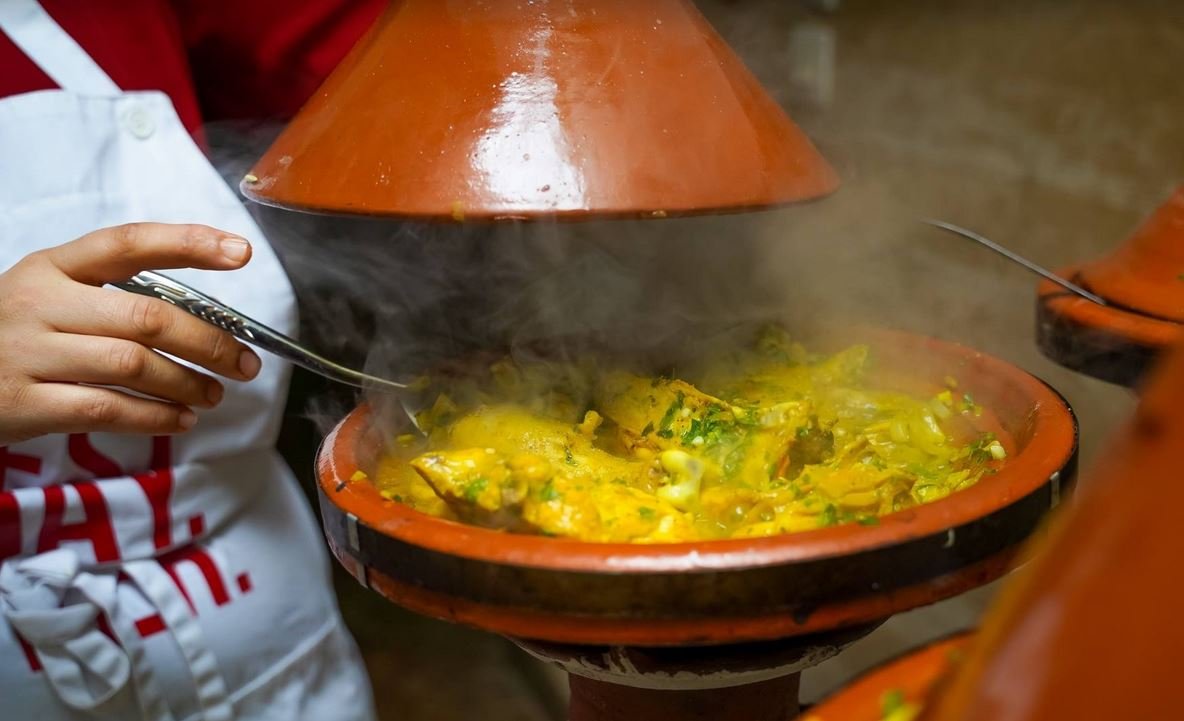
A proper tagine simmers for hours — lamb falling off the bone, preserved lemons adding tang, spices layering depth. The conical clay pot traps steam and keeps everything impossibly tender.
Couscous is the Friday dish. Families gather after mosque for tiny semolina grains steamed three times, topped with seven vegetables and meat, broth poured generously over everything.
And Moroccan mint tea is not just a drink — it's ceremony. Green tea, fresh mint, generous sugar, poured from height to create foam. Three cups minimum. Refusing tea is refusing hospitality.
The street food goes deeper: harira soup during Ramadan, msemen flatbread fried on griddles, mechoui (whole roasted lamb sold by weight), and pastilla — that impossible sweet-and-savory combination of shredded chicken, eggs, almonds, and cinnamon wrapped in filo dough and dusted with powdered sugar. Every bite confuses and delights.
Practical Tips for Visiting Morocco
Here are a few things I've picked up from traveling across this country:
Shared taxis between cities are cheap and a great way to meet locals — just know they leave only when full. If you visit the Fez tanneries, accept the mint leaves guides offer you (trust me on this one). Bargaining in the souks is expected and part of the fun, so enjoy the back-and-forth. And don't worry if you don't speak Arabic — a simple "Salam" and a smile will get you far. Moroccans are genuinely warm and want you to love their country.
Morocco's population is young — 60% under 30 — and most people speak Arabic, French, and often English. The country is investing in its future with solar farms in the Sahara and high-speed rail connecting cities, yet the medinas, crafts, and tea ceremonies continue just as they have for centuries.
Come See Morocco for Yourself
So now you know why everyone is talking about Morocco. But reading about it can only take you so far. This is a country you need to walk through, taste, smell, and feel.
Once you've wandered its alleys, sipped tea with a stranger, and watched the sun set over the Sahara, you'll carry Morocco with you. And you'll want to come back — because Morocco always has another story waiting.
Have you been to Morocco? Which part surprised you the most? Drop a comment below — I'd love to hear your story.
Salam — go in peace. But you'll be back. Morocco makes sure of it.