
Four miles. That is all the distance between Tangier, Morocco, and Europe. And when you walk through its streets, you feel every inch of that proximity.
Tangier is a Tangier Morocco European city experience that is impossible to replicate anywhere else in the country. One moment you are standing in a narrow medina alley surrounded by centuries-old Islamic architecture and the smell of freshly baked bread. The next, you are sitting at a pavement café that would look right at home in Madrid, sipping a coffee and watching the world go by. A sign above you is written in Spanish. A mosque is to your left. A church is to your right.
This city holds many layers — and peeling them back, one plate of food and one winding street at a time, is one of the most rewarding travel experiences in all of Morocco.
Why Tangier Feels So European
To understand why Tangier feels different from the rest of Morocco, you need a little history.
For over 30 years — between 1925 and 1956 — Tangier was officially classified as an International Zone, meaning it did not belong to any single country. People from anywhere in the world could come, live, work, or simply spend time there without restriction. This open, borderless status attracted traders, diplomats, artists, and adventurers from across Europe and beyond.
Add to that centuries of shifting rule — Portuguese, Spanish, and British influences all left their marks on the city — and you start to understand why Tangier's identity is so layered and so distinct.
Today, you can walk through the old medina and find a mosque, a church, and a synagogue sitting side by side. You can order food with a Spanish name in a market that has been running for hundreds of years. That is not an accident. That is Tangier.
Start Your Morning at Café Hafa — But Read This First
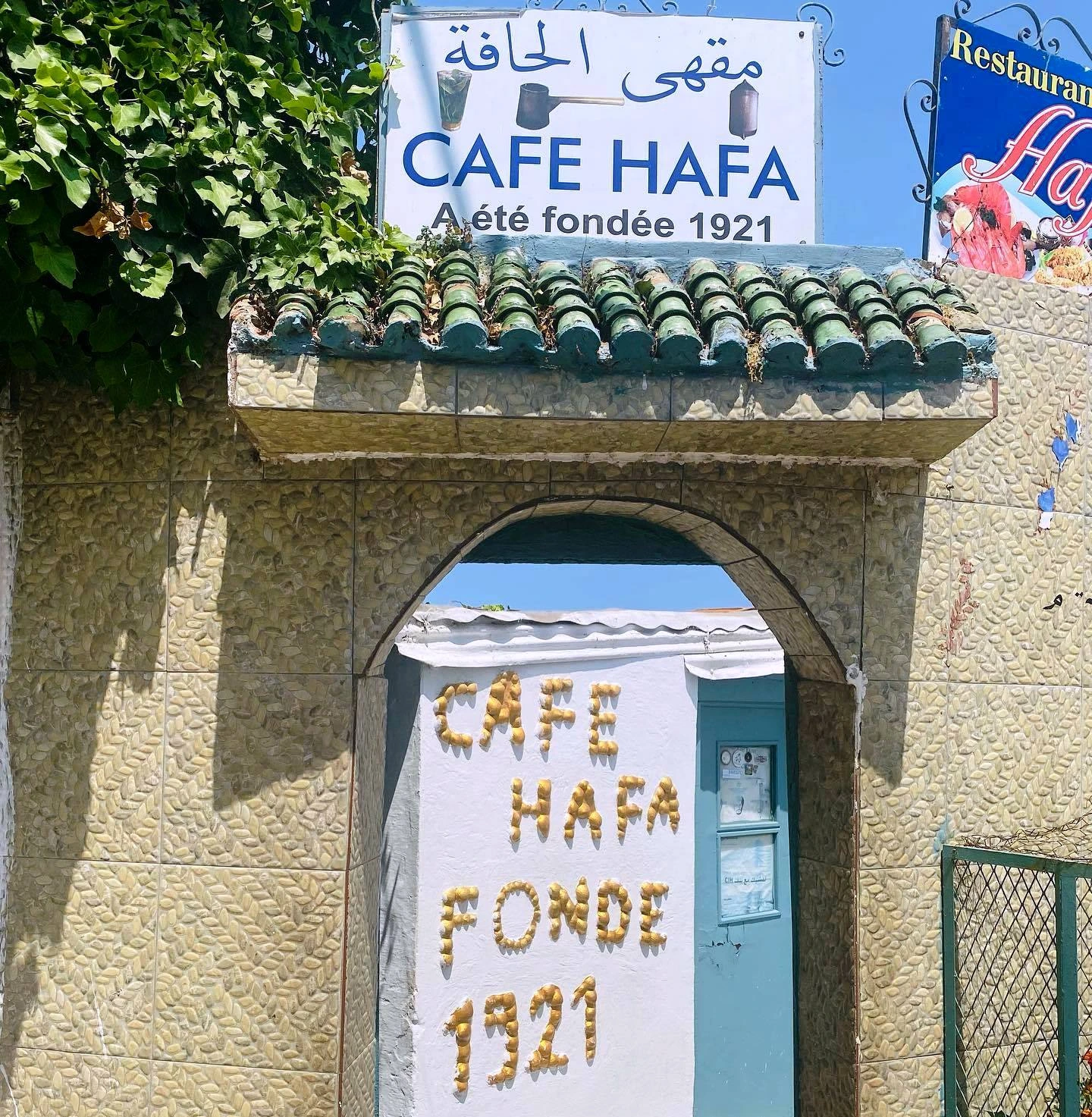
One of Tangier's most iconic spots is Café Hafa, a café perched right on the edge of the Mediterranean. The name literally means "the edge café" — and when you see the view over the sea toward Spain, you understand why.
The café is beautiful. The zellige-tiled tables, the terraced layout, the sound of the water below — it all adds up to something special. On a clear day, you can actually see the Spanish coastline in the distance.
Here is the honest advice though: go only if you have time to spare. The café is very popular and the service is slow. Waiting more than an hour for your order is not unusual. If you have a full day of exploring ahead and want to make the most of it, it may be better to enjoy the view briefly and move on. But if you want a slow, relaxed start to the day, there is nowhere quite like it.
Exploring the Medina: Where History Lives in the Walls
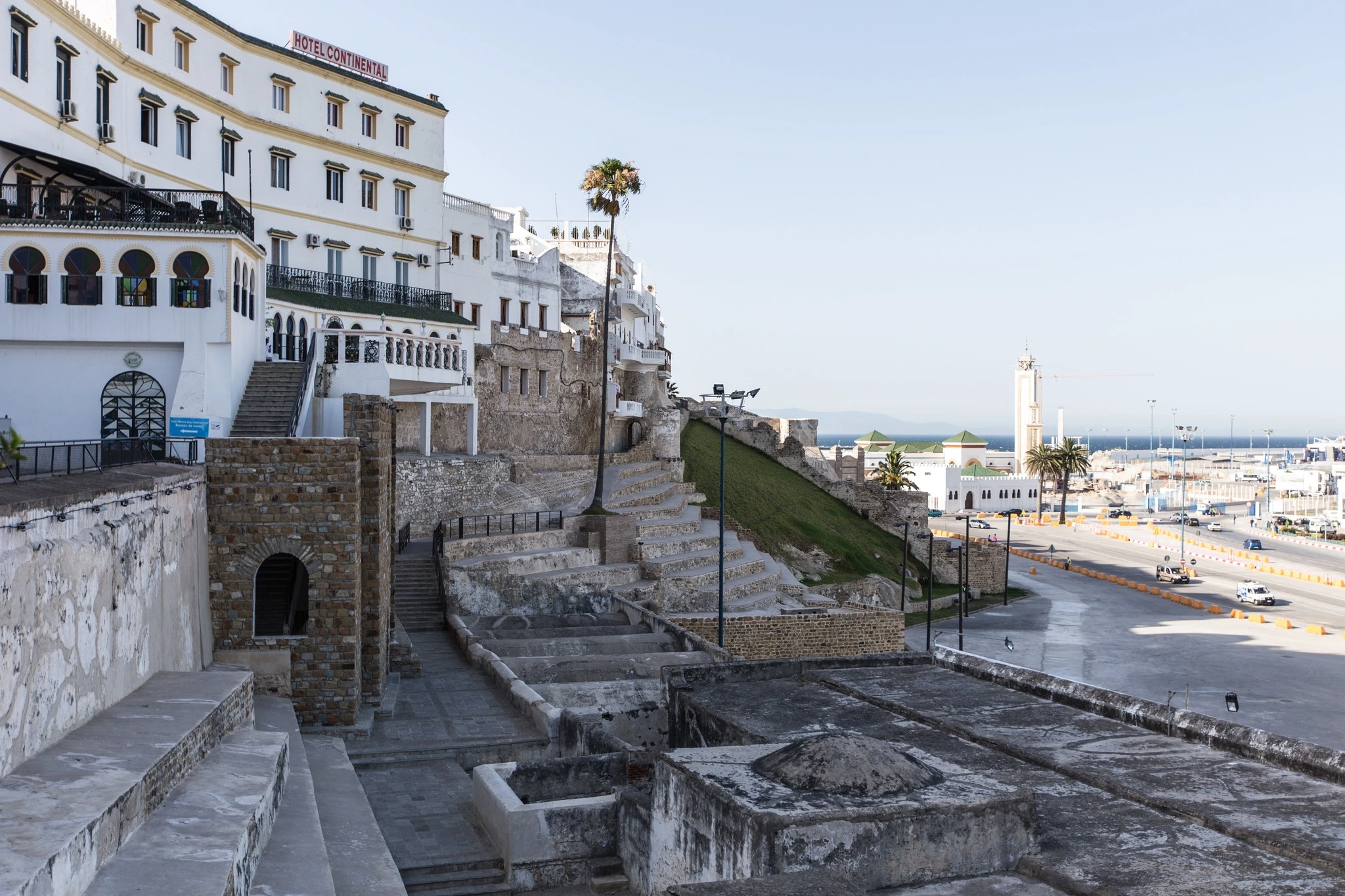
Tangier's medina — the old walled part of the city — is a living, breathing place. People actually live here. The streets are narrow and winding, the kind that make you feel like you have stepped back several centuries.
As you walk through the alleyways, keep your eyes open. Tucked between everyday life — laundry drying above doorways, children playing, women carrying groceries — are some remarkable details. Zellige tiles line the ancient public fountains, their geometric patterns still sharp and vibrant after what could be hundreds of years. Each fountain, each decorated doorway, each carved stone arch represents hours of work by craftsmen whose names we will never know.
One mosque inside the medina was built in 1684, and beside it stands Madrasa Fatima, a traditional Quranic school with a stunning gilded door. The carved details in the red stonework are extraordinary — the kind of thing that stops you mid-step and makes you stare.
You enter and exit the medina through ancient gates called babs. One of the most notable is Bab al-Bahr — the Sea Gate — and on a clear day, standing at this gate and looking out, you can see Spain across the water.
Petit Socco: The Heart of the Medina
Right in the centre of the medina sits Petit Socco, a small square that captures Tangier's mixed identity better than anywhere else. Standing there, you can see a sign written in Spanish, a Moroccan palace with classic local architecture, and a European-style hotel with yellow details on white walls — all within a few steps of each other.
This is where you should stop to try bastilla, one of the most distinctive dishes in Moroccan cuisine, and a perfect example of the city's cultural blending.
Café Central, a historic café with outdoor tables spilling into the square, is the place to order it. Bastilla is a layered, flaky pastry pie. It is thought to trace its origins to Andalusia in southern Spain, brought to northern Morocco centuries ago. There are two versions worth trying:
- Fish bastilla — filled with shrimp, noodles, egg, and spices. Savory, slightly nutty, with a surprising combination of flavors.
- Chicken bastilla — the sweeter version, dusted with powdered sugar and cinnamon, with tender chicken inside. If you only try one, this is the one.
For two bastillas, coffee, and tea, expect to pay around 243 MAD (approximately $27 USD).
Tangier Street Food You Cannot Miss
Beyond the sit-down cafés, Tangier's street food scene is vibrant — and two things stand out as genuinely must-try experiences.
Caliente — The Chickpea Street Snack
Caliente is perhaps the most famous street food in Tangier. You will spot vendors with large trays of it, surrounded by locals waiting their turn.
It is essentially a savory chickpea and egg cake — smooth, creamy, almost like a thicker hummus or mashed potato in texture. You can have it served inside a baguette or on its own on paper, with toppings of cumin, salt, black pepper, and chili. The price? 2 Moroccan dirhams. That is less than 25 cents. It is filling, warming, and genuinely delicious.
Goat Cheese with Msemen
Another Tangier staple is goat cheese (jben) paired with msemen — a buttery, multi-layered flatbread cooked fresh on the street, often called a Moroccan pancake. In northern Morocco, this combination is a beloved everyday snack: slightly tangy goat cheese, rich buttery bread, and a drizzle of honey on top.
Finding the goat cheese may take a little effort — you might need to venture into a local indoor market rather than the main tourist areas — but it is worth the detour. A whole round of goat cheese wrapped in palm leaf costs around 48 MAD.
Le Coeur de Tangier — Where the Tapas Tradition Lives On
One of the most unexpected pleasures in Tangier is its bar-tapas culture, a direct inheritance from the Spanish influence on northern Morocco. At certain local bars, when you order a drink, tapas are served alongside — no extra charge.
Le Coeur de Tangier (meaning "The Heart of Tangier") is a great example. It is a small, atmospheric bar with warm-colored lighting and windows overlooking the street below. The beer of choice here is Casablanca lager, widely considered Morocco's best local beer.
Order a round, and the staff will ask if you want tapas. Say yes. On the visit described in the video, two rounds of drinks brought out fried fish, prawn balls, pasta-rice with braised carrot and beetroot, chicken with potatoes, and a full plate of fruit — all complimentary with the drinks.
Honest tip: this kind of tapas bar culture is not common across Morocco. It is a Tangier specialty, deeply tied to the city's Spanish heritage and international history. If you visit Tangier, do not leave without experiencing it at least once.
Practical Tips for Visiting Tangier
- Getting there: Tangier has its own airport (Tangier Ibn Battuta Airport) with connections to major Moroccan and European cities. You can also arrive by ferry from Spain.
- Getting around: The medina is best explored on foot. Petit Taxis are available for longer distances within the city.
- Budget: Tangier is very affordable. Street food like caliente costs as little as 2 MAD. Sit-down meals at historic cafés average 100–250 MAD per person.
- Best time to visit: Spring (April–June) and autumn (September–November) offer the most comfortable weather.
- Language: Arabic and Darija (Moroccan dialect) are widely spoken. Spanish is also commonly understood in Tangier, given its proximity to Spain.
- A simple tip that always works: A warm "Salam" and a smile will open doors everywhere.
Conclusion — Tangier Will Surprise You (In the Best Way)
Tangier is not the Morocco most people picture when they imagine this country. There are no vast sand dunes here, no pink desert sunsets. What Tangier offers instead is something rarer — a city that carries centuries of layered history, cultural blending, and genuine character in every alleyway, every plate of food, every tiled fountain.
Whether you are tasting bastilla in a square where Spanish signs hang above Moroccan palaces, eating a 2-dirham caliente on the street, or stumbling into a tapas bar that feels like it belongs in Barcelona — Tangier will surprise you, challenge your assumptions, and leave you wanting more.
Have you been to Tangier? What was the moment that surprised you most? Drop your experience in the comments below — and if you are planning your first visit, let me know and I will do my best to help you plan it.
Up next on Bewildered in Morocco, we head south to the famous Blue City of Chefchaouen — and trust me, it is every bit as magical as you have heard. Read the Chefchaouen guide here →