
Have you ever wondered what it's like to stand on the roof of Morocco? Let me take you to Tacheddirt, a remote Berber village perched at 2314 meters in the High Atlas Mountains. This isn't your typical tourist stop—it's a place where mountain air feels crisp in your lungs, where traditional clay houses cling to steep valleys, and where the warmth of Berber hospitality makes every visitor feel at home.
Over the years, I've explored countless corners of Morocco, but Tacheddirt holds a special place in my heart. It's where modern life pauses, where ancient traditions breathe, and where every sunrise paints the snow-capped peaks in shades of gold and rose.
Why Tacheddirt Morocco Should Be On Your Travel List
A Village Above the Clouds
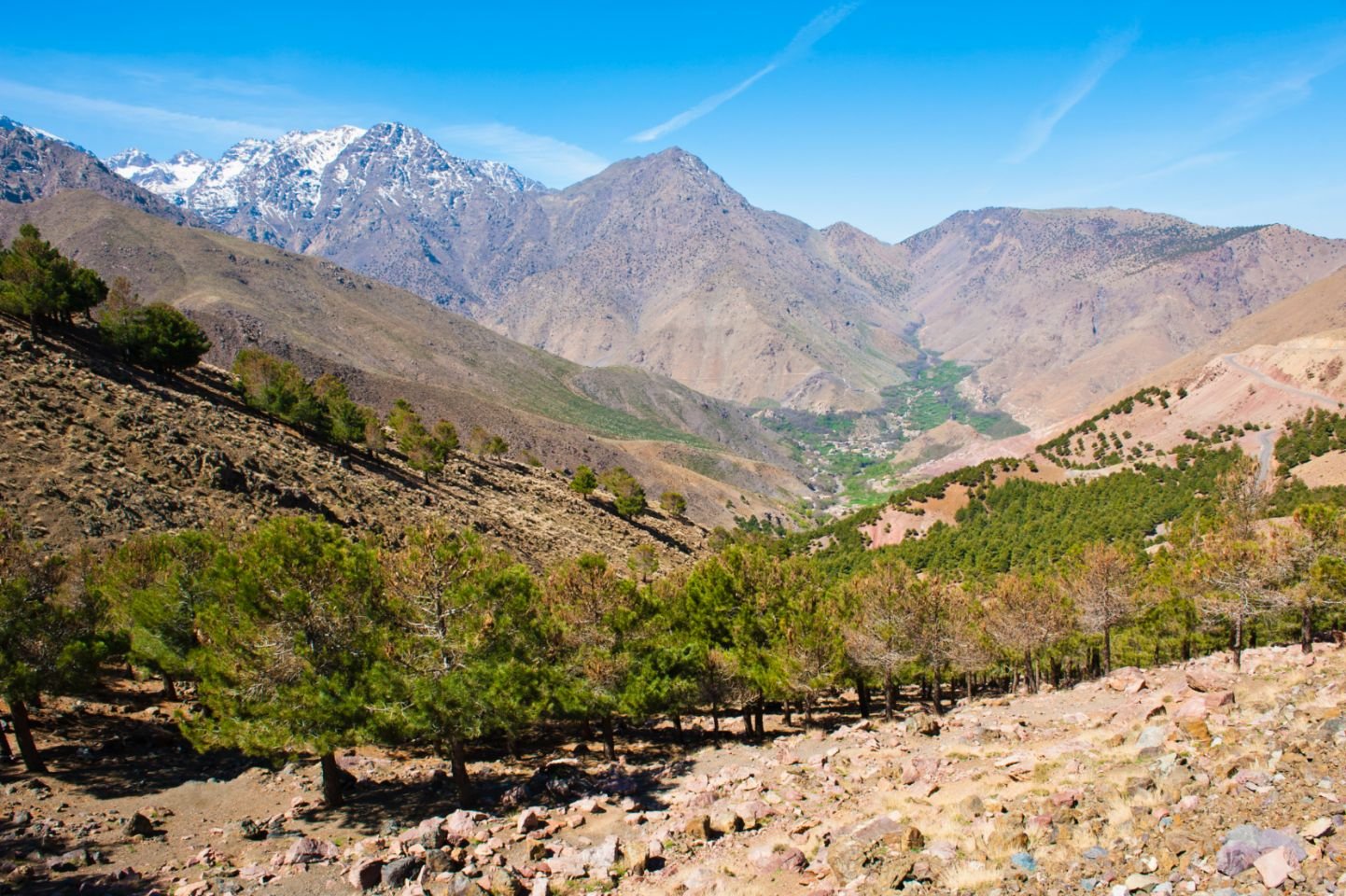
Tacheddirt sits in the Rhirhaia valley, about 4 kilometers upstream from Ikkiss, making it the highest settlement in this spectacular region. The village falls within the Marrakech-Safi region, near the commune of Asni, and serves as a gateway to Toubkal National Park—home to North Africa's highest peak, Jebel Toubkal.
What makes this village truly special isn't just its elevation. It's the way life unfolds here, unchanged by decades, where farming terraces cascade down mountainsides and where forests of birch, juniper, and saxifrage create a dramatic natural backdrop.
The Journey Matters
Getting to Tacheddirt is half the adventure. Most travelers start in Marrakech, and from there, the journey becomes a story worth telling.
From Marrakech to Imlil
Your first step takes you to Imlil, the bustling village known as the gateway to the High Atlas. Shared taxis run regularly from Marrakech to Imlil—a budget-friendly option where you'll share the ride with other travelers and locals. These taxis wait until they're full before departing, so bring a book or simply enjoy watching the plains gradually give way to mountain foothills. The journey takes about 1.5 to 2 hours, and the views get better with every kilometer.
The Trek from Imlil
Once you reach Imlil, the real adventure begins. There's no road for cars beyond this point—only footpaths that have been walked for centuries. The trek to Tacheddirt typically takes 2.5 to 4 hours, depending on your pace and how often you stop to catch your breath or snap photos (and trust me, you'll want to do both frequently).
The trail leads you eastward up the valley, passing through Tamatert and over a mountain pass. You'll walk along the south side of the valley until you reach a river ford that brings you into Tacheddirt proper. Along the way, you might see villagers collecting firewood or shepherds guiding their flocks—glimpses of a lifestyle that has sustained these mountain communities for generations.
What to Experience in Tacheddirt Morocco
Trekking Adventures
Tacheddirt serves as an excellent base camp for mountain exploration. Many trekkers spend a night or two here before pushing deeper into the High Atlas, but I recommend staying longer and using the village as your hub for day hikes. This approach lets you explore without the pressure of constant packing and unpacking.
Popular Routes:
The trek from Imlil to Tacheddirt makes for a relatively gentle introduction, with moderate elevation changes perfect for acclimatization. From Tacheddirt, you can continue eastward up the valley to Tizi n' Tacheddirt pass at 3230 meters—a challenging but rewarding climb.
For experienced hikers seeking serious adventure, the circular route through Ouka-Tacheddirt-Tim offers varied terrain and stunning vistas. The truly ambitious can tackle multi-summit routes, including peaks like Aneghmer (3920m), Taddat, Ayour, and Bouiguenouane.
Each trail reveals different facets of the High Atlas—from gentle valleys dotted with wildflowers to rugged ridges where snow lingers into late spring.
Living Berber Culture
Beyond the hiking, Tacheddirt offers something increasingly rare: authentic cultural immersion. The villagers here maintain traditional ways of life, and they're remarkably welcoming to visitors who approach with respect and genuine interest.
Staying in a local guesthouse like Tigmi Tachddirt means experiencing Berber hospitality firsthand. You'll sleep in traditionally decorated rooms, eat homemade meals prepared with local ingredients, and probably find yourself invited to share mint tea—Morocco's universal symbol of welcome and friendship.
The tea ceremony itself is worth experiencing. Watch as your host pours from height, creating a frothy layer that signals proper preparation. The first glass is often strong, the second sweeter, and the third smoother still. Each cup tells a story of patience and tradition.
The village economy relies mainly on subsistence farming and livestock. You'll see terraced fields carved into impossibly steep slopes, growing crops hardy enough to survive the altitude and temperature swings. Goats and sheep are everywhere, their bells creating a gentle soundtrack to mountain life.
Understanding Traditional Mountain Architecture
My background in construction has taught me to appreciate how buildings respond to their environment, and Tacheddirt's traditional houses are masterclasses in climate-appropriate design.
The thick walls and small windows aren't arbitrary choices—they're intelligent responses to harsh mountain conditions. Those thick walls, built from local stone and clay, insulate interiors against summer heat and winter cold. Small windows minimize heat loss while still allowing light inside.
The natural materials blend seamlessly with the landscape, making the village look almost like a natural extension of the mountainside. This sustainable building practice, refined over centuries, shows deep understanding of local climate and available resources.
Practical Information for Your Visit
Best Time to Visit
Spring (April-May) and autumn (September-October) offer the most pleasant trekking conditions, with mild temperatures and stable weather. Summer months (June-August) bring warmth ideal for higher-altitude exploration, though afternoons can get hot at lower elevations.
Winter (November-March) transforms Tacheddirt into a snowy wonderland, but this season requires specialized gear and experience with winter mountain conditions. Snow can make trails challenging or impassable for inexperienced trekkers.
Do You Need a Guide?
While experienced mountain trekkers might manage shorter, well-marked trails independently, I strongly recommend hiring a local guide, especially for longer routes or if you're new to mountain trekking. Guides ensure your safety, share cultural insights you'd otherwise miss, and help you discover hidden spots off the main trails. Plus, hiring local guides directly supports the community.
Where to Stay
Accommodation in Tacheddirt means traditional guesthouses and mountain refuges, typically run by Berber families. These range from dormitory-style rooms to private quarters, all offering authentic experiences. Expect comfortable beds, hot meals, and genuinely warm hospitality. Don't expect luxury hotels—the real luxury here is simplicity and connection to place.
What to Pack
Essential items include:
- Sturdy hiking boots (broken in before your trip!)
- Layered clothing (temperatures swing dramatically from day to night)
- Sun protection: hat, sunglasses, high-SPF sunscreen
- Refillable water bottle
- Basic first-aid supplies
- Any personal medications
- Camera (you'll regret not bringing one)
- Waterproof layers if visiting in shoulder seasons
- Warm clothing for evenings year-round
Family-Friendly?
Tacheddirt can work for families who enjoy outdoor activities and don't mind basic accommodations. Shorter walks around the village offer cultural experiences without demanding fitness, though longer treks might challenge very young children. Assess your family's abilities honestly before committing.
Speaking the Language of Hospitality
You don't need to speak Arabic or Tamazight (the Berber language) to connect with people in Tacheddirt, but learning a few phrases shows respect and opens doors.
"Salam alaikum" (peace be upon you) is your universal greeting. Follow it with a smile, and you've made a friend. Moroccans, especially in close-knit mountain communities, respond warmly to visitors who make even small efforts to engage respectfully.
That smile and simple greeting can lead to shared meals, impromptu tea ceremonies, and conversations that transcend language barriers.
Why Tacheddirt Stays With You
Every time I return to Tacheddirt, I'm struck by how completely it contrasts with Morocco's bustling cities. There's no call to prayer from multiple mosques competing for airspace. No motorbikes weaving through crowded medinas. No merchants calling out to tourists.
Instead, there's the sound of wind through valley walls, the distant tinkling of goat bells, and the rush of mountain streams. There's the sight of first light touching the highest peaks while the valley still sleeps in shadow. There's the taste of fresh bread baked in a traditional oven, served with local honey and butter.
But what really stays with you is the people. The shepherd who stops to point out the trail. The grandmother who insists you take more tea. The children who wave shyly from doorways. These moments of human connection, set against one of nature's most spectacular backdrops, create memories that outlast any photograph.
Your Turn to Explore
Tacheddirt isn't easy to reach. It requires effort, a willingness to leave comfort zones, and an openness to experiencing Morocco at its most authentic. But if you're reading this, you're probably exactly the kind of traveler who'll appreciate what this village offers.
Have you visited remote mountain villages elsewhere in Morocco or in other countries? What made those experiences memorable for you? Are you planning a trek to Tacheddirt, or does this inspire you to add it to your Morocco bucket list?
Share your thoughts in the comments below—I'd love to hear about your mountain adventures or help answer any questions about planning your own journey to this spectacular corner of the High Atlas.