
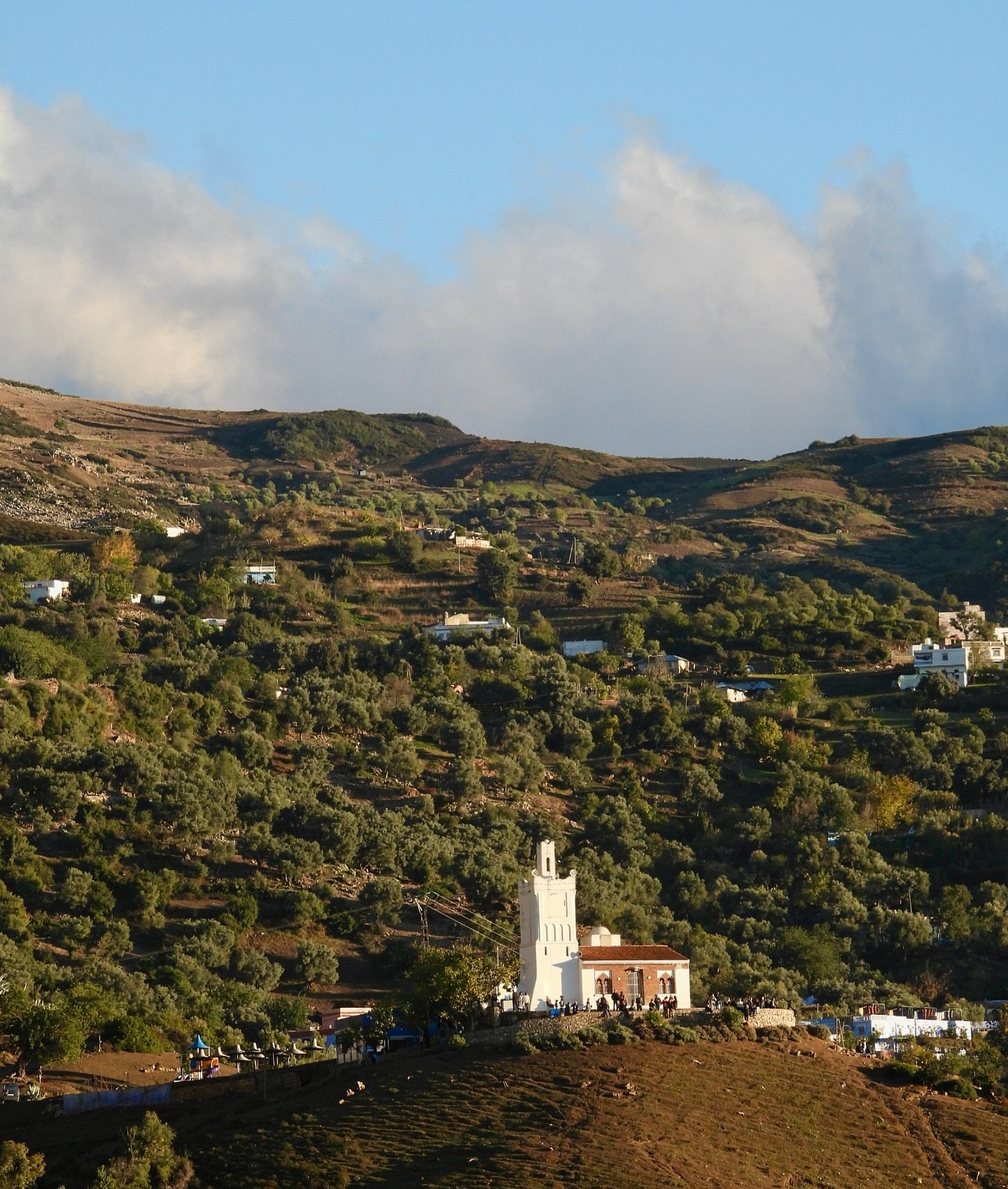
If you’ve ever climbed up to one of the hilltops overlooking Chefchaouen, you might have noticed a small white mosque sitting quietly above the blue rooftops — almost like a sentinel watching over the city. That’s the Bouzaafar Mosque, and trust me, its story is unlike anything you’d expect.
Because here’s the thing: this mosque was built by the Spanish during their occupation of northern Morocco, and to this day — nearly a century later — not a single prayer has ever been performed inside its walls.
I know. Let that sink in for a moment.
A Mosque Built by Colonizers
The history of Bouzaafar Mosque is wrapped in layers of oral tradition and scholarly debate, but most accounts agree on one thing: it was built after the second Spanish occupation of Chefchaouen in 1926.
According to Yassine Aghlalou, a researcher specializing in Chefchaouen’s history, there are several stories floating around about the mosque’s origins. The most widely accepted version is that it was commissioned by Colonel Fernando Capaz, the Spanish military commander in the region. Capaz was apparently quite the strategist — he spoke fluent Arabic and had actually lived undercover in Morocco for years before the occupation of Chefchaouen. He understood the local culture well enough to know that building a mosque might help win over the hearts of the people.
The historian Taha Ben Farouq Al-Rissoni confirms this in his book about Chefchaouen’s history, noting that the Spanish protectorate authorities built the mosque as part of a broader campaign to establish administrative, educational, and religious infrastructure — all designed to make the colonial presence more palatable to the locals.
Spoiler alert: it didn’t work.
So Why “Bouzaafar”?
This is where it gets really fun, because there are at least three different stories about the name, and they all involve a man with an impressively long mustache.
Story one: The mosque was named after Colonel Fernando Capaz himself, who was known for his long, handlebar-style mustache. “Bouzaafar” roughly translates to “the one with the long mustache” in the local dialect.
Story two: The name actually refers to the Spanish engineer who oversaw the mosque’s construction. Nobody remembers his real name, but everyone remembers his mustache. So “Bouzaafar” it was.
Story three: Historian Abdessalam Belkadi offers a completely different take. He claims the name comes from the original owner of the land where the mosque was built — a merchant who traded between Ceuta and Chefchaouen and who was also, you guessed it, known for his magnificent mustache.
Whatever the true origin, researcher Mohammed Amlal believes the most likely candidate for the name is the Spanish engineer, since Colonel Capaz was already well-known by name to the locals and they would have simply used his actual name if they wanted to.
Either way, I absolutely love that this whole naming mystery revolves around facial hair. Only in Morocco.
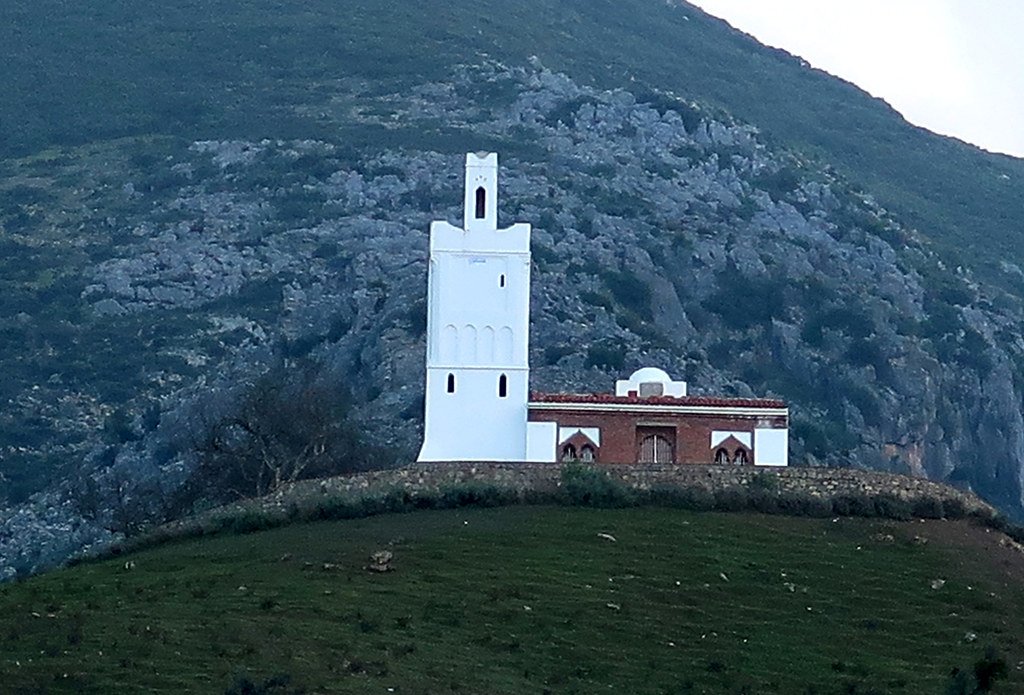
[IMAGE: The Bouzaafar Mosque — white building on the hilltop above Chefchaouen]
A Century of Silent Protest
Here’s the part that really gives me chills. The Spanish built this mosque hoping it would bridge the gap between colonizer and colonized. Instead, the people of Chefchaouen turned it into a powerful symbol of resistance.
They simply refused to pray in it. Ever.
Yassine Aghlalou confirms that no prayer has ever been held inside Bouzaafar Mosque. The only religious activity that ever took place there was the call to prayer — the adhan — and even that was performed irregularly. Two local religious scholars, known as Fqih Zannan and Fqih Sherif Alami Ghazzoumi, took turns calling the adhan from the mosque, but they were paid by Morocco’s religious endowment authority, and their commitment was, let’s say, not exactly enthusiastic.
The reason for the boycott? The people of Chefchaouen believed the mosque was built for espionage purposes. Others went even further — the city’s renowned historian Ali Al-Rissoni explains that many locals didn’t even consider it a mosque at all. They saw it as a church disguised as a mosque, and they wanted nothing to do with it.
And here’s what makes this story truly powerful: this boycott wasn’t a passing protest. It has lasted from 1926 to the present day. Nearly 100 years of a community silently, stubbornly refusing to legitimize a colonial structure. That’s the kind of deep-rooted resilience that defines northern Morocco’s history.
Why You Should Still Visit
Now, even though prayers have never been held inside Bouzaafar, the mosque has found a second life — as one of Chefchaouen’s best-kept secrets for visitors.
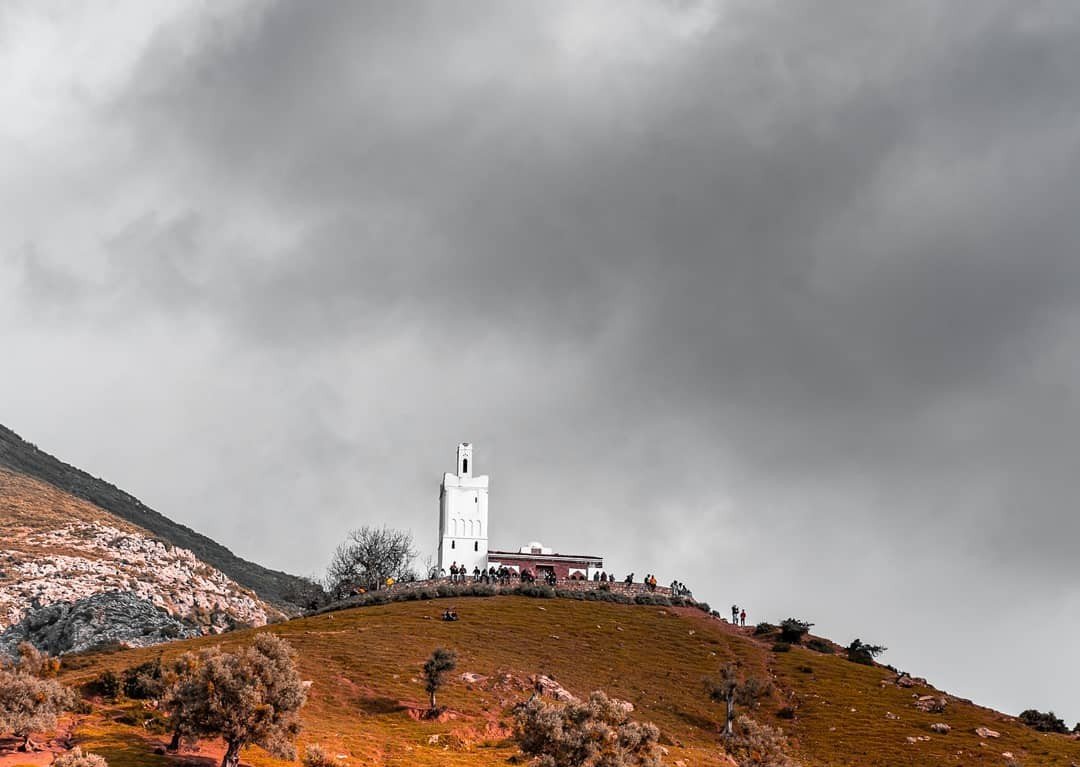
The location is absolutely spectacular. Perched on a hilltop, it offers what is arguably the best panoramic view of the Blue City. If you’ve seen those breathtaking photos of Chefchaouen from above — the blue houses cascading down the mountainside, framed by the Rif Mountains — there’s a good chance they were taken from the Bouzaafar hilltop.
The sunset from up there? Unforgettable. Trust me on this one.
The area around the mosque is also close to several other interesting spots, including the Ras El Ma spring (one of Chefchaouen’s main natural attractions), the shrine of Sidi Boujemaa, and the site of Lalla Aicha Al-Adawiya.
In 2007, the local municipality renovated the mosque and paved the road leading up to it, making it much more accessible. They’ve also placed benches around the area so you can sit and soak in the views at your own pace.
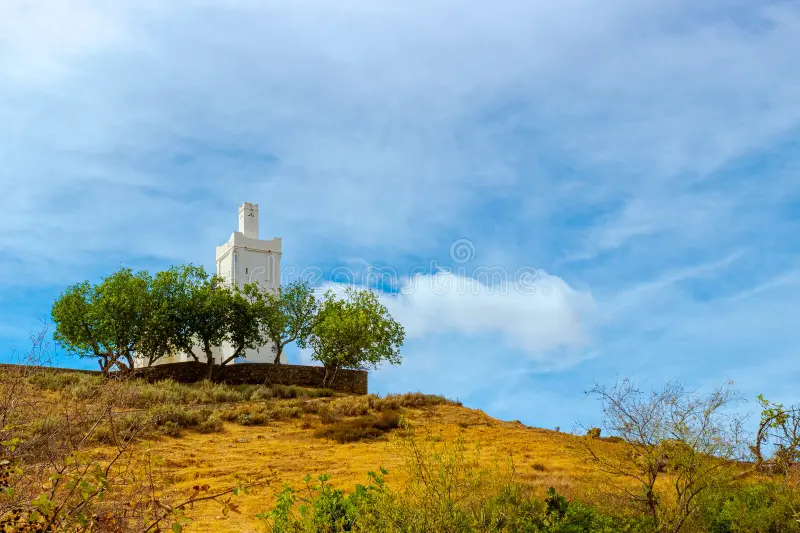
[IMAGE: Sunset view from the Bouzaafar hilltop overlooking the Blue City]
A Future Full of Possibilities
Many residents of Chefchaouen feel that the Bouzaafar area has untapped potential. Some dream of cafés and small hotels being built nearby to create a more developed tourist zone — something that could bring jobs and economic opportunities to the community.
Others have an even more interesting idea: transforming the mosque into a museum that celebrates Chefchaouen’s artistic heritage and provides a platform for local artists and creators. Given the city’s incredible tradition of handicrafts and visual arts, I think this would be an amazing use of the space.
Researcher Yassine Aghlalou makes an important point, though — he feels that city officials haven’t done enough to promote this colonial-era landmark and its unique history. And I’d have to agree. For a site with such a powerful story, Bouzaafar remains surprisingly under the radar.
Getting There
The mosque is located on a hilltop above Chefchaouen’s medina. Since the road was paved in 2007, it’s a relatively easy walk, though you’ll be going uphill. Wear comfortable shoes and bring water — the climb is worth it, especially if you time it for late afternoon when the light is golden and the city below practically glows blue.
There’s no entrance fee (it’s not functioning as a mosque, after all), and you’re free to explore the area around it and take as many photos as your heart desires.
Final Thoughts
What I love about the Bouzaafar Mosque is how it captures so many layers of Chefchaouen’s identity. It’s a reminder of the colonial era and the resistance that defined it. It’s a testament to the strength of a community that chose silence over compliance. And now, it’s becoming a place where visitors from around the world come to see the Blue City in all its glory.
If you visit Chefchaouen (and you absolutely should), make sure to climb up to Bouzaafar. Stand where the Spanish once stood and tried to win hearts. Look out over the blue rooftops. And think about the quiet, century-long protest happening right beneath your feet.
That’s Morocco for you — every corner has a story, and every story has a depth that catches you off guard.
———
Have you visited the Bouzaafar Mosque? Did you know about its history? I’d love to hear your thoughts and stories — drop a comment below or reach out to me on social media!