
Founded by Phoenicians, Conquered by the Portuguese, and Loved by Artists
By Monika | Bewildered in Morocco
There are some places in Morocco that grab you the moment you step through their gates. Asilah — or Azila, as the locals call it — is one of those places. This tiny coastal gem on the Atlantic, just a short trip from Tangier, has a way of making you feel like you’ve wandered into a living painting. And in many ways, you actually have.
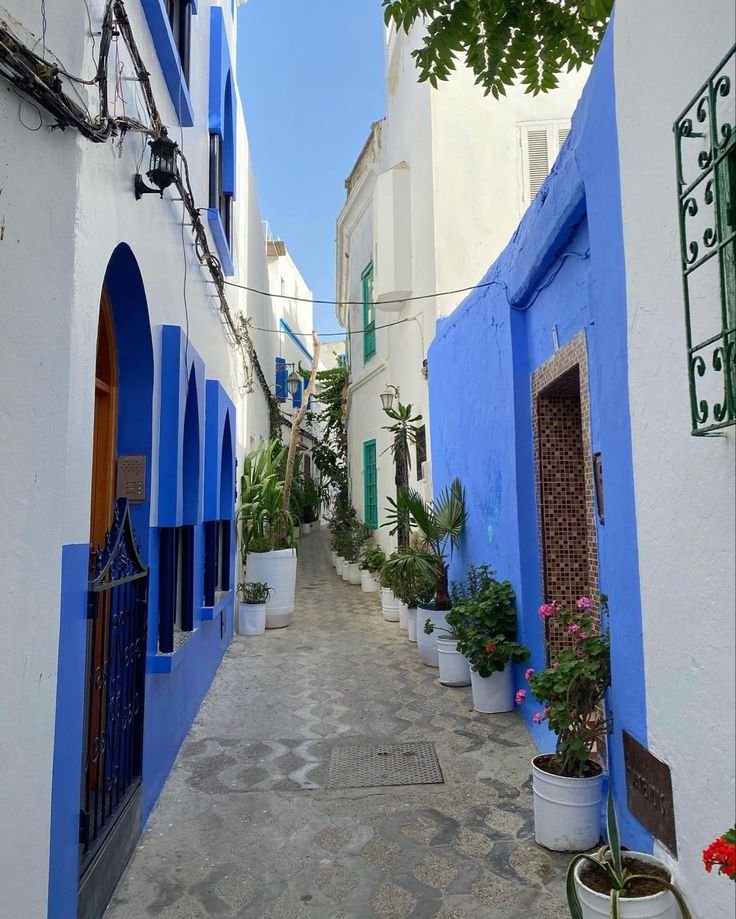
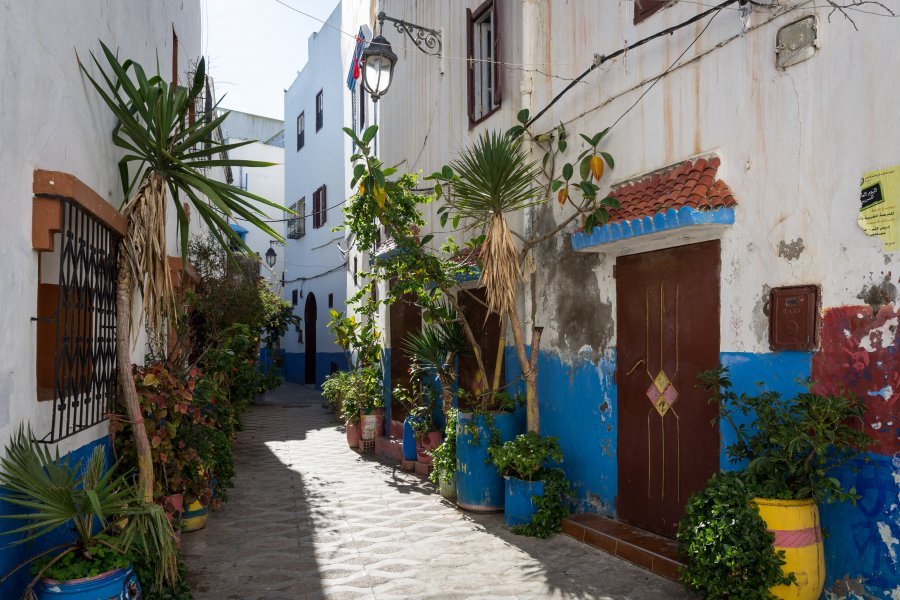
I remember the first time I walked through Asilah’s medina and saw the murals — splashes of color climbing up whitewashed and blue walls, art tucked into every corner and alley. It felt like the whole town was a gallery without doors. But what really captivated me was learning just how many layers of history are hidden behind those beautiful walls.
So let me take you on a little journey through Asilah — a city that’s been standing for over 2,000 years and has one of the most fascinating stories in all of Morocco.
A City Born from Ancient Civilizations
Asilah’s roots go way back — we’re talking over two millennia. The Phoenicians were among the first to settle here, followed by the Carthaginians. Later, the Romans claimed the city and called it Zilis, which is actually the origin of its current name. Imagine walking the same streets where Roman traders once did their business. That thought alone gives me chills every time I visit.
The city’s history before the Islamic era is a bit murky, but what we do know is that it was devastated by the Vandals — one of the eastern Germanic tribes. It was later rebuilt around 229 AH (roughly the 9th century) by the Berber tribes of Ketama and Houara, who fortified it with walls and watchtowers to fend off Viking raids. Yes, Vikings in Morocco! History is wild, isn’t it?
By the late 9th century, the city gained importance when refugees from Sheduna (Sidonia) fled there after a failed revolt against the Umayyad prince Abdullah ibn Muhammad. This influx of people transformed Asilah into a significant center in northern Morocco, and its reputation only grew during the Idrisid dynasty.
The Portuguese Chapter: A Dramatic Takeover
Here’s where things get really dramatic. In 1465, the Wattasid Sultan Muhammad al-Sheikh chose Asilah as his base to launch attacks on Fez, the Marinid capital. But in 1471, when the sultan left to fight in Fez, the Portuguese saw their chance. King Afonso V sent a massive fleet to attack the city.
The people of Asilah fought back fiercely — they managed to kill 200 Portuguese soldiers. But the toll was devastating: 2,000 citizens were killed, and 5,000 were captured, including the crown prince. When the sultan returned, he was forced to negotiate, essentially handing over Asilah, Ceuta, and Ksar es-Seghir to Portugal for twenty years in exchange for the prisoners.
It wasn’t until 1589 that the Saadian Sultan Ahmad al-Mansur al-Dhahabi reclaimed the city, following the legendary Battle of the Three Kings (Wadi al-Makhazin) near Ksar el-Kebir — a battle so dramatic that three kings died in it, including the Portuguese King Sebastian himself. Now that is a history lesson you won’t forget.
From Spanish Protectorate to Independence
Asilah’s story of foreign rule didn’t end there. During the French Protectorate era, the city fell under Spanish control. Before the Spanish arrived, though, the area was under the powerful rule of the local warlord Raisuni, who fiercely resisted Spanish influence and controlled large parts of northern Morocco until 1924, when the Spanish finally entered Asilah.
Morocco regained the city after independence in 1956, but it wasn’t until the late 1970s that Asilah truly found its modern identity — and what an identity it is.
The Cultural Renaissance: Art, Murals, and the Famous Moussem
In the late 1970s, something magical happened. Asilah launched its annual Moussem — a cultural festival that would change the face of the city forever. Every summer, the festival draws a special kind of tourist: people who fall in love with Asilah’s cultural soul, its coastal beauty, and its elegant yet simple architecture.
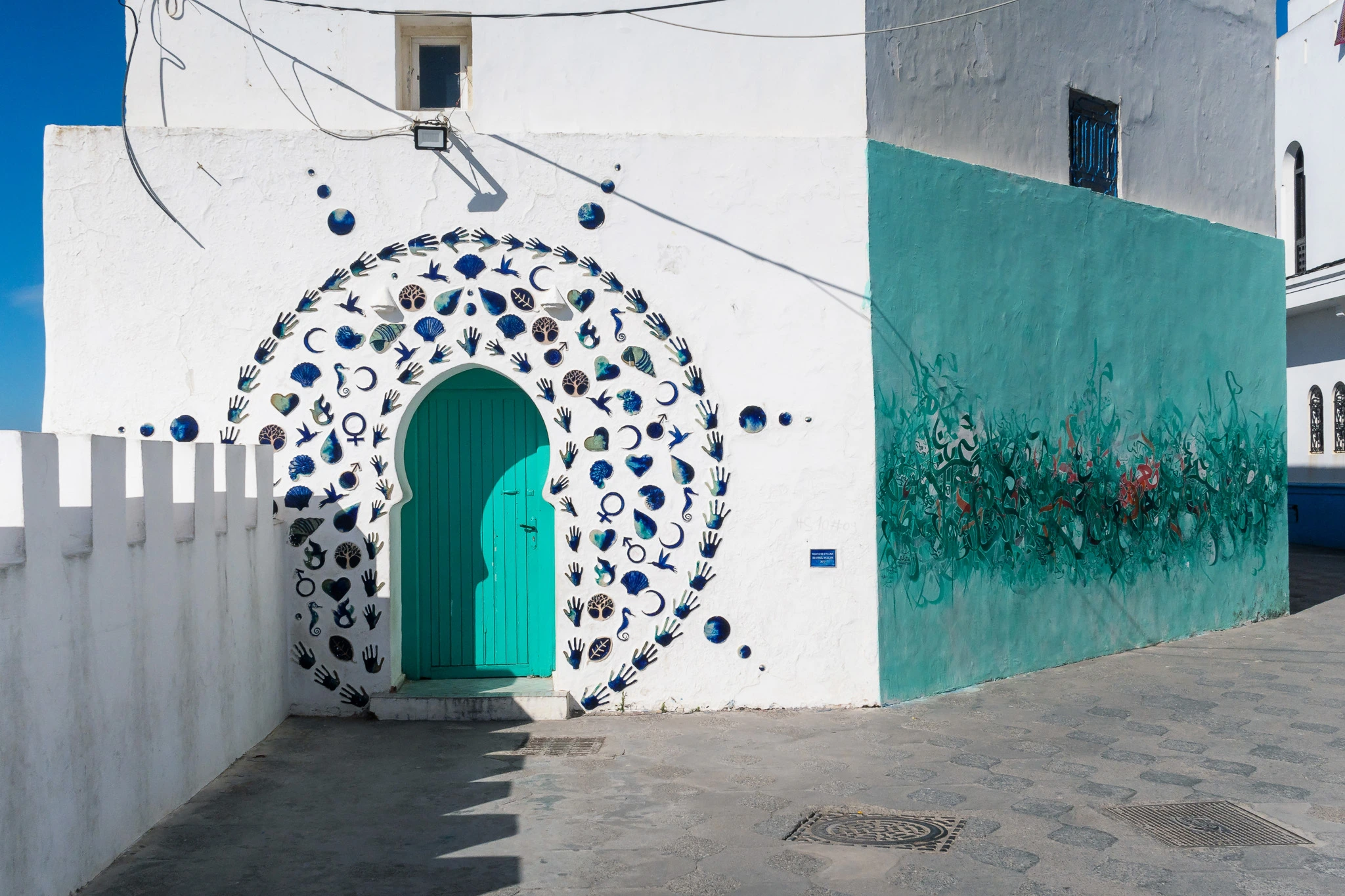
The festival is famous for inviting artists from around the world to paint murals on the walls of the old medina. These aren’t just quick sketches — they’re stunning works of art that transform the city’s blue-and-white walls into an open-air museum. Among the most notable Moroccan artists who lived and worked in Asilah was Mohamed Melehi, one of the country’s most celebrated contemporary painters.
Over the years, the city has also been adorned with gardens named after poets and writers from across the Arab and African worlds — Tchicaya U Tam’si, Mahmoud Darwish, Tayeb Salih, Mohamed Abed al-Jabri, and others. Walking through these gardens, you feel connected to a wider cultural conversation that stretches across continents.
Historical Landmarks You Shouldn’t Miss
Borj al-Kamra (The Tower of the Moon) — This iconic watchtower overlooks the Atlantic and is said to be the very spot from which the Portuguese King Sebastian set off for the Battle of the Three Kings. The tower was restored in the early 1990s as part of a Moroccan-Portuguese collaboration and is one of the most photographed spots in the city.
Raisuni Palace — Perched at the far edge of the medina overlooking the sea, this grand palace was built in the early 20th century by the legendary Commander Raisuni. It has since been restored by the Asilah Forum Foundation and now hosts cultural and artistic events. Standing in its courtyard with the sound of crashing waves below, you truly feel the weight of history.
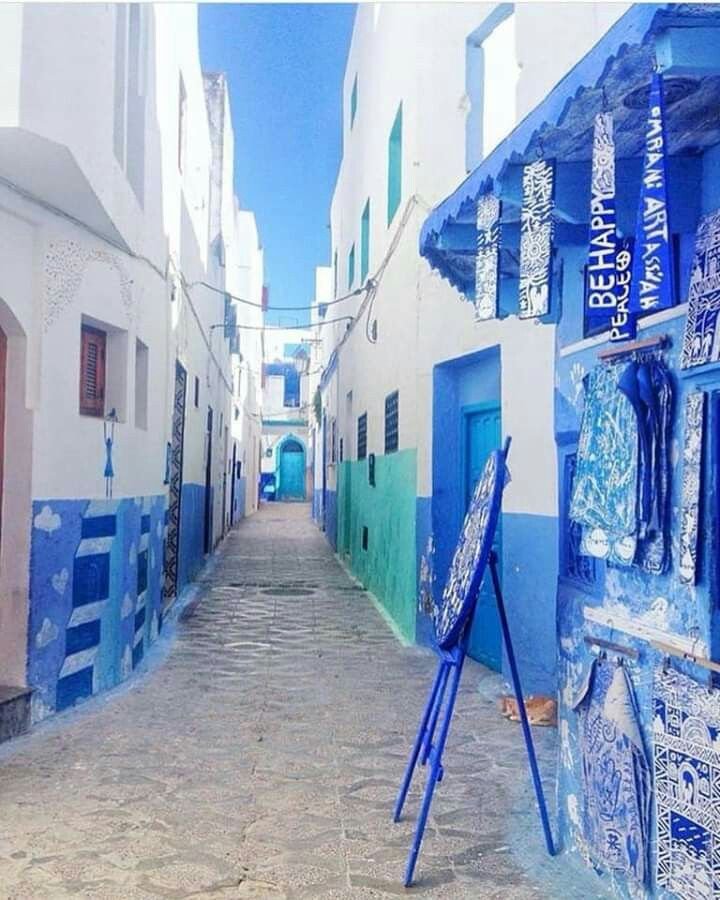
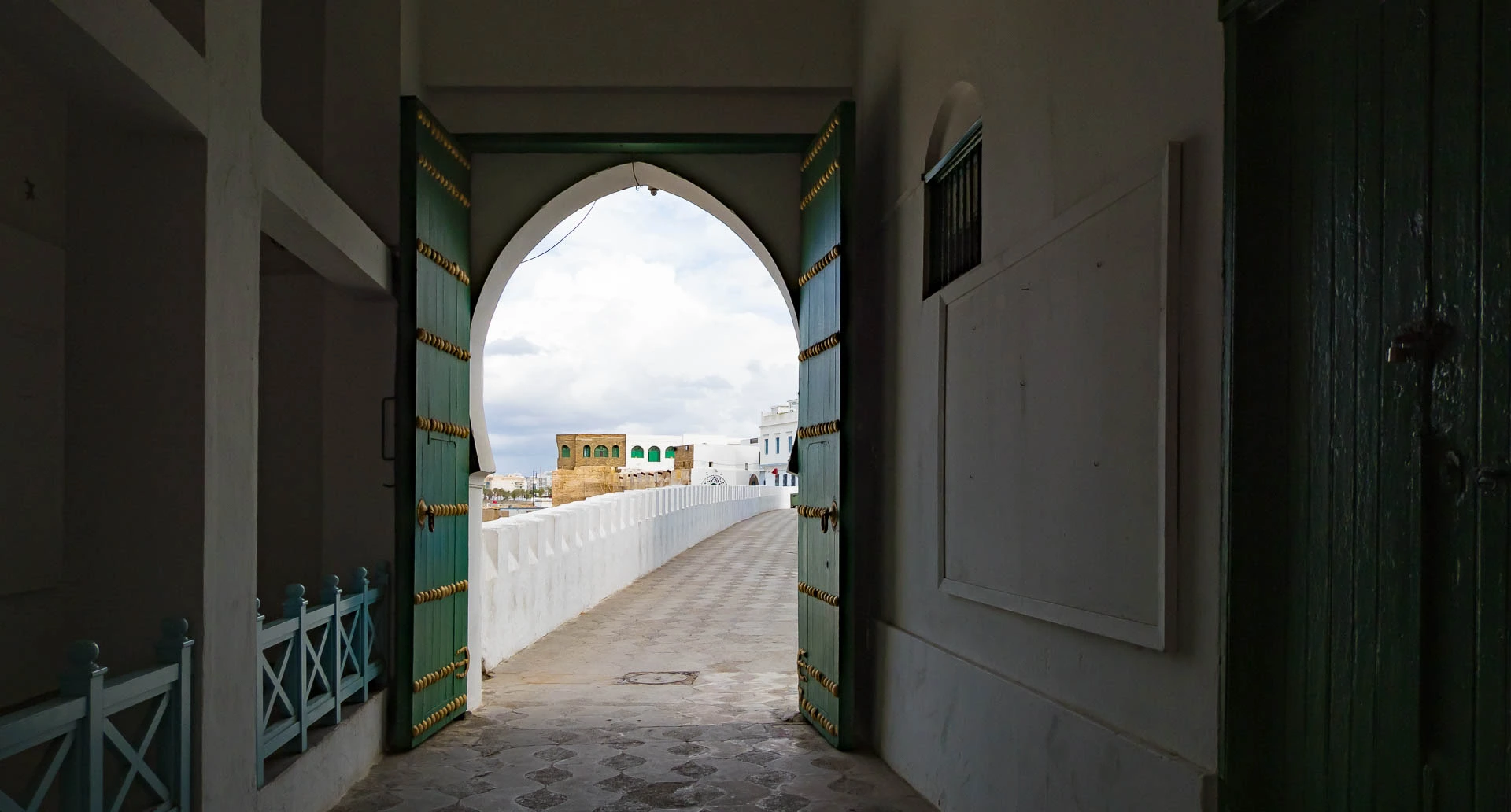
The Medina Walls and Murals — Of course, no visit to Asilah is complete without getting lost (in the best way) in the medina. The blue-and-white color palette, combined with the ever-changing murals, makes every visit feel fresh and new.
Practical Tips for Visiting Asilah
Asilah is a small city — only about 23 square kilometers — so you can easily explore it on foot in a day or two. It’s located close to Tangier, making it a perfect day trip or a quiet weekend escape.
The city really comes alive during summer, when both tourists and locals flock to its beautiful beaches. Asilah is known for its fresh seafood, so make sure you try the catch of the day at one of the local restaurants near the port.
Most of the residents have roots in the mountainous Rif region of northern Morocco, and the local culture reflects that — warm, proud, and incredibly welcoming.
And of course, if you can time your visit with the annual cultural festival (usually held in the summer), you’ll get to experience Asilah at its most vibrant and inspiring.
Why Asilah Has My Heart
There’s something about Asilah that keeps pulling me back. Maybe it’s the way the Atlantic light hits the white walls in the late afternoon. Maybe it’s the quiet magic of walking through streets where Phoenicians, Romans, Portuguese kings, and Moroccan freedom fighters once walked. Or maybe it’s simply the feeling that in Asilah, art and history aren’t locked behind museum doors — they’re painted right on the walls for everyone to see.
If you haven’t visited Asilah yet, put it on your list. And if you have, I’d love to hear about your experience in the comments!