
When the skies opened up over Rabat on stadium opening day, I watched from my apartment as rain poured down like someone had turned on a giant tap. My neighbor knocked on my door, worried. "The match! The new stadium! All that rain!"
But when I checked the news later, the Rabat stadium pitch looked perfect. Not a puddle in sight. The grass was green, firm, and ready for action. How?
I had to find out. What I learned amazed me—and showed me once again how Morocco is mixing traditional wisdom with cutting-edge technology.
Why the Rabat Stadium Pitch Matters
Football is serious business in Morocco. We live and breathe it. When our national team plays, the whole country stops. Streets empty. Cafés fill up. Everyone watches.
So when Morocco built the Prince Moulay Abdallah stadium in Rabat, it couldn't just be good. It had to be world-class. The pitch needed to handle our hot summers, sudden winter rains, and the pressure of thousands of fans hoping for victory.
The opening day rain was the first real test. And the Rabat stadium pitch passed with flying colors.
The Secret: Hybrid Grass Technology
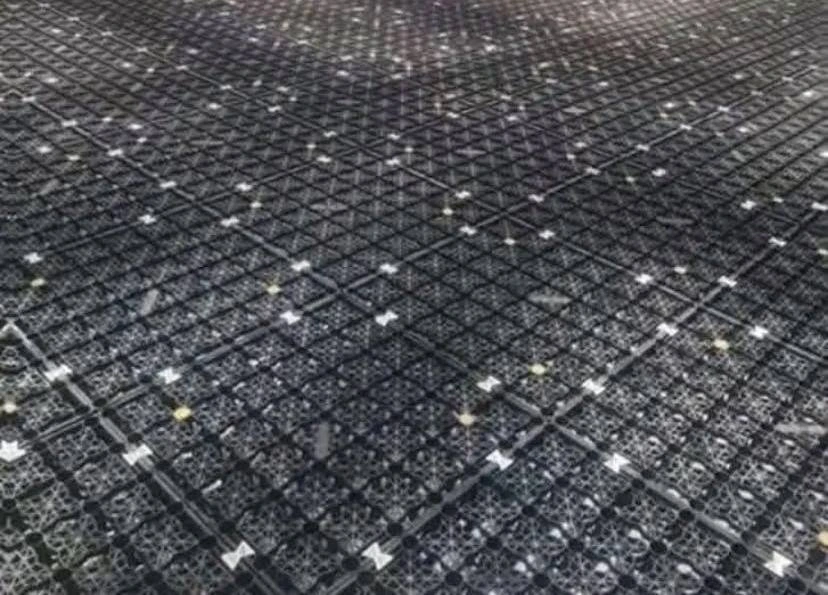
Here's where it gets interesting. The grass at the stadium isn't just grass. It's a hybrid—part natural, part artificial.
Think of it like this: imagine weaving strong artificial fibers into natural grass roots. The natural grass gives you that soft, real feel players love. The artificial fibers give you strength and stability. Together, they create something tougher than either one alone.
This hybrid grass can handle heavy use without falling apart. When players run, slide, and tackle, the artificial fibers keep everything stable. When rain pours down, the natural grass absorbs water while the synthetic parts maintain structure.
I wish my own garden had this technology! My little patch of lawn turns into a mud bath after every storm.
Changing with the Seasons
But here's something even more clever. SONARIGIS, the national company managing the stadium, doesn't use the same grass all year round.
In cold months: They plant Ray-grass (scientifically called Lolium perenne, but everyone just calls it Ray-grass). This grass loves cool weather. It stays green and strong even when temperatures drop. Perfect for Morocco's winter months when rain is common.
In hot months: They switch to Bermuda grass (called "Thil" in Morocco). This grass thrives in heat and can handle our intense summer sun without turning brown and crispy.
It's like changing your wardrobe from winter to summer—except with grass. Smart, right?
This seasonal rotation means the pitch is always at its best, no matter what time of year you visit the stadium.
The Hidden Layers Beneath
What you see on the surface is just the beginning. Underneath that beautiful green grass, there's a whole engineered system. The Rabat stadium pitch has multiple carefully designed layers:
Layer 1 - The Support Foundation: At the very bottom, there's a solid base that keeps everything stable.
Layer 2 - The Drainage System: This is where the magic happens. More on this in a moment.
Layer 3 - The Sand Layer: A special sand layer helps water move through quickly while providing stability for grass roots.
Layer 4 - The Growth Layer: The topmost layer where the grass actually grows, carefully mixed to provide nutrients while allowing water to pass through.
Each layer has a purpose. Each layer works with the others. It's like a well-made baklava—you need every layer for the perfect result.
The Drainage Magic
Now for the really impressive part: how the water disappears so quickly.
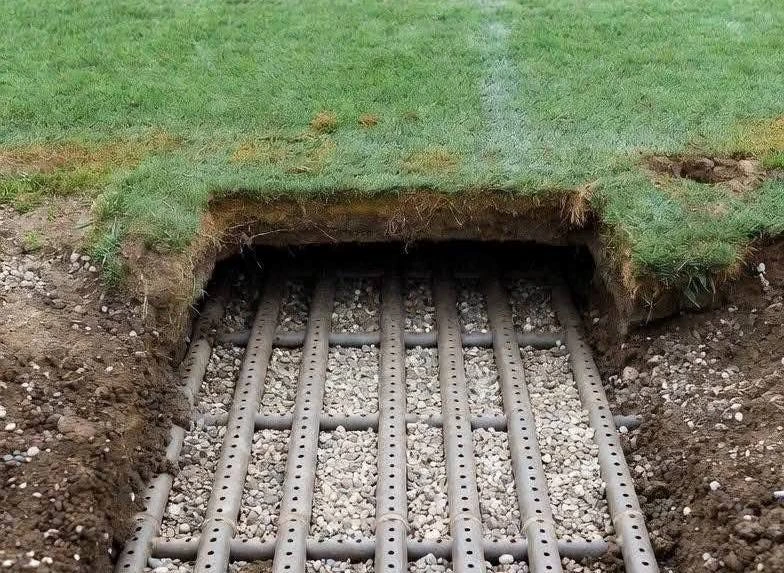
Under the grass, there are layers of sand and gravel arranged with precision. Think of them as nature's filter system on steroids. Water hits the grass, filters down through the sand, and keeps moving.
But it doesn't just sink into the ground randomly. Special membranes underneath prevent water from seeping into the earth below. Instead, these membranes guide the water toward massive drainage pipes.
The stadium uses what experts call "forced drainage." Instead of waiting for gravity to slowly pull water away, the system uses pumps. These pumps actively push excess water out, fast.
On opening day, while the rain hammered down, these pumps were working overtime, evacuating water almost as quickly as it fell.
Water Doesn't Go to Waste
Here's something that made me smile when I learned about it: the rainwater doesn't just get thrown away.
The stadium has an isolation and collection system. Rain that falls on the pitch gets separated, cleaned, and stored in underground tanks. Later, after treatment, this same water gets used to irrigate the grass.
In a country where water is precious—and every Moroccan knows it is—this recycling system makes perfect sense. It's environmentally smart and economically wise. We're taking care of our resources while maintaining a world-class facility.
Smart Systems Running the Show
The technology doesn't stop at drainage. The Prince Moulay Abdallah stadium uses several intelligent systems:
Smart Irrigation: Sensors throughout the pitch monitor moisture levels. The system automatically adjusts how much water the grass receives. Too dry? More water. Too wet? Hold back. No guesswork, just data.
Light Therapy (Luminotherapy): Special lights encourage grass growth, especially during darker winter months. The grass gets the light it needs to stay healthy and green, even when Rabat's skies are gray.
Ventilation Systems: The stadium uses steam and air circulation to maintain perfect humidity balance and keep the pitch temperature controlled. This prevents the grass from getting too hot or too cold.
All these systems work together like a well-trained team. And just like a football team, every part has to do its job perfectly.
What This Means for Moroccan Football
Walking through Rabat now, I feel proud when I pass the stadium. It represents something important: Morocco isn't just keeping up with global standards—we're setting them.
This kind of technology means:
- Players perform at their best on a reliable surface
- Matches don't get cancelled or delayed due to weather
- Morocco can host international competitions with confidence
- We're showing the world what Moroccan engineering can achieve
The Rabat stadium pitch is more than grass and drainage pipes. It's a statement about where Morocco is headed.
A Personal Reflection
You know what struck me most about this whole system? It's very Moroccan in spirit.
We take something traditional—grass, water, soil—and we enhance it with modern technology. We respect our climate and work with it, not against it. We think about conservation and efficiency. We plan for different seasons and changing conditions.
This is the Morocco I see every day. A country that honors its heritage while embracing innovation. A place where old wisdom meets new ideas.
The stadium pitch is just one example. But it's a beautiful one.
Come See for Yourself
If you're visiting Morocco and you love football, try to catch a match at the Prince Moulay Abdallah stadium in Rabat. Even if you're not a huge football fan, the stadium itself is worth seeing.
Take a moment to appreciate that perfect green grass. Remember what's happening beneath the surface—the hybrid fibers, the drainage system, the smart sensors, the recycled rainwater.
That pitch tells a story about modern Morocco.
Have you visited the Prince Moulay Abdallah stadium? What impressed you most? Or maybe you have questions about Moroccan football culture? Drop a comment below—I'd love to hear your thoughts and experiences!
And if you're planning to attend a match in Morocco, check out my guide to Moroccan Stadium Etiquette to make the most of your experience.