
People who visit Morocco usually go to Marrakech, Fes, or Chefchaouen. That is fine — those places are beautiful. But there is a village tucked high in the Atlas Mountains that most travelers never hear about. It sits at 2,400 meters above sea level, and it carries a title that stopped me in my tracks the first time I heard it: the highest village in North Africa.
Its name is Tajdirt (also spelled Tacheddirt or Tchedirt). And once you see it, you will wonder how you ever planned a Morocco trip without it.
What Makes Tajdirt the Highest Village in North Africa?
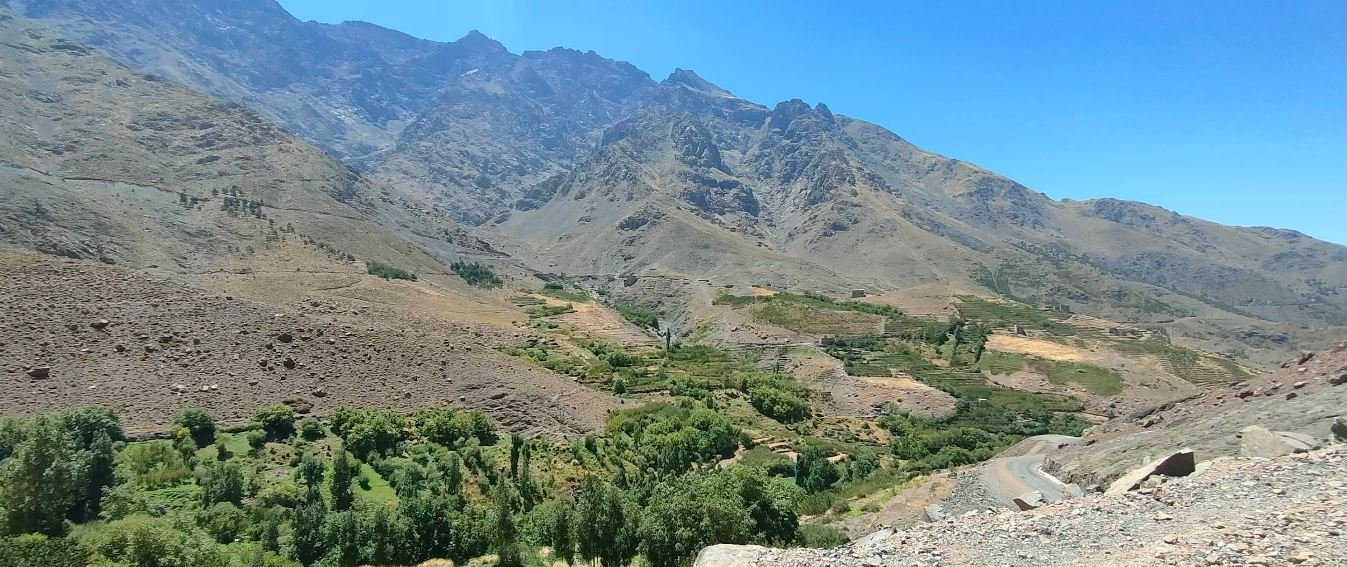
Tajdirt is located in the Al Haouz region of the High Atlas Mountains, not far from the better-known valley of Imlil. The village sits above the clouds on some mornings, and you can feel the altitude the moment you step out of your vehicle. The oxygen is thinner up here — your body knows it.
The village is home to around 600 people who have lived in these mountains for generations. Local guide Ibrahim, who runs a guesthouse right in the village, told us the settlement is believed to be around 300 years old, maybe older. The original houses were built from stone and earth, with wooden roofs — no cement, no modern materials. Some of those old structures still stand today and survived the 2023 Al Haouz earthquake with only minor damage.
A Village Older Than Many Countries
When Ibrahim told us the village age, something clicked. This community has been living at 2,400 meters above sea level, in one of the harshest climates in North Africa, for three centuries. That is not just remarkable — it is humbling.
The surrounding peaks reach even higher. There are summits of 3,910m, 3,882m, and 3,800m within hiking distance. For experienced trekkers, multi-day routes connect Tajdirt to Tizilikent and Lake Defni — a six-day adventure that Ibrahim helps organize during summer months.
Getting to Tajdirt: What You Need to Know
The Road Is Part of the Adventure
Getting to the highest village in North Africa requires a 4WD vehicle. A regular car will not manage the mountain road — it is narrow, steep, and winds through cliff edges with drops on one side and rock faces on the other. The journey from Imlil takes about an hour of slow, careful driving.
You can rent a 4WD like a Dacia with or without a driver. If you are not comfortable with mountain roads, hire a driver — the price usually includes them. For groups of three or four people, splitting the cost makes it very affordable.
The road will make you stop every five minutes. You will want to. The views of snow-capped mountains, rivers cutting through valley floors, and traditional stone villages clinging to hillsides are the kind of scenery you only expect to see in Patagonia or Pakistan. It exists right here in Morocco.
Where to Stay in Tajdirt
There are around 15 small guesthouses (boujers) in the village. Ibrahim's guesthouse is right in the heart of things and overlooks the valley. Rooms start from around 400 dirhams for two people — simple, clean, and positioned for a sunrise that will genuinely stop you from speaking.
Wake up to the sound of goats, clean mountain air, and mountains that turn pink at dawn. Breakfast is served with the Atlas range as your backdrop. Stay at least three nights if you want to truly feel the rhythm of the village.
Life in the Highest Village in North Africa
The people of Tajdirt are farmers, herders, porters, and guides. Some keep livestock and small plots of land. The region is known for walnuts, apples, and cherries, though the high altitude means a short growing season. Many families now work in tourism, either running guesthouses, guiding hikes, or working with mules that carry equipment for trekking groups.
What strikes you most is the warmth of the people. Within minutes of arriving, an elderly man carrying a heavy load on his back stopped and offered to have coffee with us. A young girl named Hanan — sweet, confident, and speaking a little French — volunteered to show us around the village lanes. A local family served us a bubbling tagine for lunch without us even asking.
The Spanish tourists we met at Ibrahim's guesthouse said it better than I could: "In Marrakech, everything feels like a transaction. Here, people share what they have with you and smile because they want to."
There is also a mosque and Quranic school at the center of the village — the imam teaches children to memorize the Quran each year. Eleven years of this tradition have continued without interruption, even at 2,400 meters above sea level.
The Snowfall, the Waterfalls, and the Views
During our visit, the village had seen its heaviest snowfall in 24 years. The mountains above were completely white, and the narrow paths through the village were covered in a thin layer of snow that crunched under every step.
A waterfall fed by snowmelt flows down from the mountain year-round. It passes through the village and carries on into the valley below — not seasonal, not temporary. It is always there, summer and winter. Walking up to where the waterfall begins, with snow-covered peaks above and green valley below, feels completely surreal. One of our group compared it to Patagonia. He was not wrong.
When the sun sets behind the Atlas peaks, the mountains turn deep red, then pink. Sit on the terrace at Ibrahim's guesthouse at golden hour and you will understand why some visitors who planned one night end up staying three or four.
Practical Tips for Visiting Tajdirt
- Best time to visit: Late March to May, when snow has cleared from the roads but the mountains are still green. Summer works well for multi-day treks.
- Getting there: Drive or hire a 4WD from Imlil. Imlil itself is accessible from Marrakech by shared taxi or private car (around 1.5 hours).
- Entry fee at Oukaimeden (on the way): 15 dirhams per person — worth every bit for the snow views.
- What to bring: Layers, good walking shoes, and something warm for the night. The temperature drops significantly after sunset at this altitude.
- Accommodation: Book ahead through local contacts. Ibrahim's guesthouse is recommended — ask for him in the village.
- Language: Amazigh (Tamazight) is the first language here. Arabic and a little French will get you far. A smile will get you further.
This Is the Hidden Morocco Worth Finding
The highest village in North Africa is not on most tourist itineraries. It does not have a famous medina or a UNESCO badge. What it has is something harder to find and easier to remember — real life, real people, and scenery that makes you question every trip you planned to Switzerland instead.
If you have visited Marrakech and want to go somewhere that will change how you see Morocco entirely, start driving toward the Atlas. Keep going past Imlil. Take the winding road. When you think the road cannot get any narrower, it does. And then you arrive.
Have You Visited the Atlas Villages?
Have you been to Tajdirt, Imlil, or any of the High Atlas villages? Or is it now on your list? Drop your thoughts in the comments below — I would love to hear from anyone who has made this journey, or from anyone planning to. And if you have questions about getting there or what to pack, ask away!