
There’s something special happening in Casablanca. Walk through the city today, and you’ll feel the energy of change—modern cafés opening their doors, young creatives finding their voice, and Moroccan talent making waves both at home and abroad. And now, in the heart of this vibrant city, a new café has opened that brings together two worlds I love: art and football.
Café Juj Casablanca is not just another coffee spot. This is a place where Morocco’s contemporary spirit comes alive, born from the vision of two remarkable Moroccans—football sensation Achraf Hakimi and the artist they call the “Andy Warhol of Marrakech,” Hassan Hajjaj.
The Story Behind Café Juj
When I first heard about Café Juj Casablanca, I was curious. What happens when a world-class footballer teams up with one of Morocco’s most celebrated artists to open a café? The answer, as it turns out, is something truly unique to our country’s evolving cultural landscape.
The name itself, “Juj,” is pure Moroccan. In Darija (Moroccan Arabic), “juj” means “two”—a perfect name for a partnership between two creative minds. But it also speaks to something deeper: the duality of modern Morocco, where tradition meets innovation, where local culture embraces global influences, and where a footballer and an artist can come together to create something meaningful.
The inauguration of this new Casablanca café was anything but ordinary. The atmosphere buzzed with excitement as some of Morocco’s biggest names gathered to celebrate this new venture. It wasn’t just about opening a café—it was about celebrating what Moroccan talent can achieve.
Achraf Hakimi: From Moroccan Streets to World Stages

If you follow football, you know Achraf Hakimi. Born in Madrid to Moroccan parents, Hakimi has become one of the most recognizable faces of Moroccan football. Playing for Paris Saint-Germain and representing Morocco on the international stage, he’s shown the world what Moroccan talent looks like.
But what many people might not know is how deeply connected Hakimi remains to Morocco. Despite his success in Europe, he hasn’t forgotten his roots. Café Juj Casablanca is proof of that connection. Instead of investing his success solely abroad, Hakimi chose to bring something back to Morocco—a space that reflects both his global experience and his Moroccan heart.
When you’re from Morocco and you make it big somewhere else, there’s always this pull to give back. Hakimi could have opened a café anywhere in the world. Paris, Madrid, Milan—he’s lived in these cities. But he chose Casablanca. That tells you something about the man and his love for his country.
Hassan Hajjaj: The Andy Warhol of Marrakech
Now, let me tell you about Hassan Hajjaj, because his story is equally fascinating. If Hakimi represents Morocco’s sporting excellence, Hajjaj represents our artistic soul.
Hassan Hajjaj is a contemporary Moroccan artist who splits his time between London and Marrakech. His work is instantly recognizable—bold, colorful, playful, and deeply Moroccan. He’s earned the nickname “Andy Warhol of Marrakech,” and when you see his art, you understand why. Like Warhol’s pop art transformed American culture into art, Hajjaj transforms Moroccan culture—our patterns, our colors, our everyday objects—into stunning contemporary pieces.
Hajjaj specializes in pop art with a distinctly Moroccan twist. He photographs his subjects against backdrops of vibrant Moroccan textiles, frames his work with recycled soda cans, and incorporates traditional Moroccan elements in ways that feel fresh and modern. His work has been exhibited in major galleries worldwide, but it never loses its Moroccan essence.
What makes Hajjaj’s participation in Café Juj Casablanca so exciting is that he brings an artistic vision to the space. This isn’t just a café where you grab coffee—it’s a café that looks and feels like a work of art, where Moroccan aesthetics meet contemporary design.
The collaboration between Hakimi and Hajjaj represents something powerful: two Moroccans at the top of their fields, one in sports and one in art, coming together to create a cultural space. It’s about showing that Moroccan success isn’t limited to one arena—we excel in many fields, and when we collaborate, we create something even more special.
The Grand Opening: A Star-Studded Affair


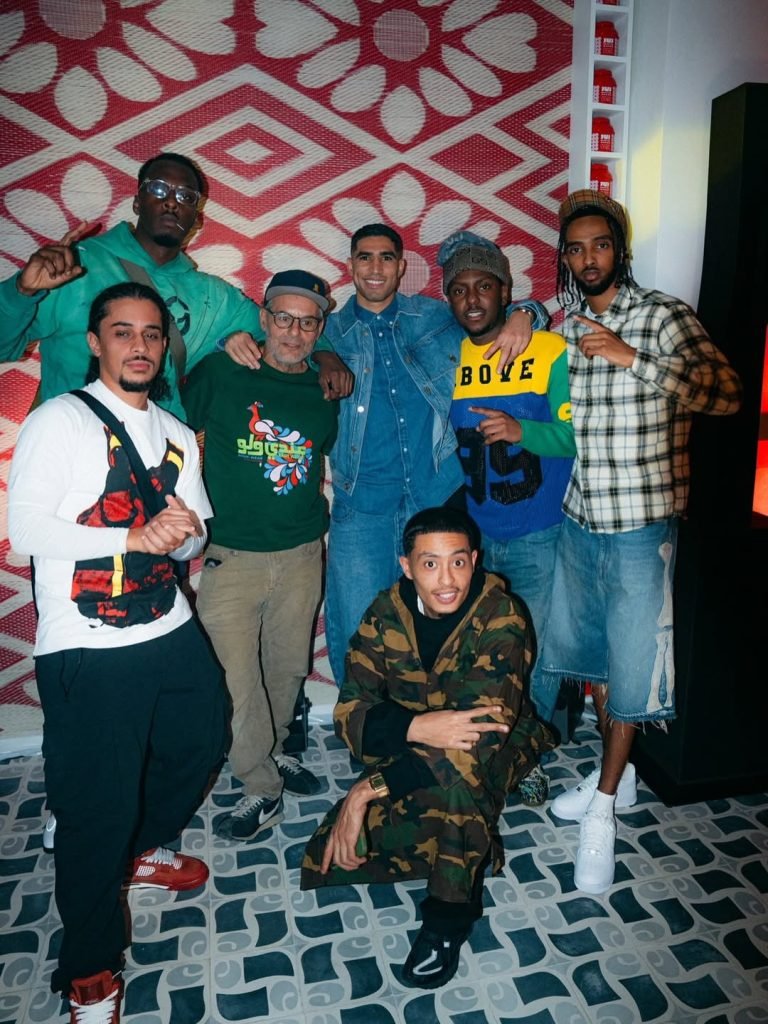
The inauguration of Café Juj Casablanca was the kind of event that gets Casablanca talking. When you bring together sports stars, artists, and musicians in one place, you know something special is happening.
Among the guests at the opening were some of the biggest names in Moroccan football. Yassine Bounou, the goalkeeper who became a national hero during the 2022 World Cup, was there. If you watched Morocco’s historic run to the semi-finals in Qatar, you remember Bounou’s incredible saves that kept our dreams alive. Seeing him at Café Juj showed the strong bonds between Morocco’s football community.
Azzedine Ounahi, another star who shone during that World Cup campaign, also attended. These aren’t just football players—they’re symbols of a generation of Moroccan talent that’s making the world take notice.
The guest list wasn’t limited to athletes. The café opening also brought together artists and musicians who represent Morocco’s contemporary creative scene. Stormy, the Moroccan rapper whose music blends Arabic lyrics with modern hip-hop beats, was there. Draganov and Morad, both known for their contributions to Morocco’s urban music scene, added to the star power of the evening.
And then there was Miryam Labiad, a close friend of Achraf Hakimi, whose presence highlighted the personal connections that make Café Juj more than just a business venture—it’s a gathering place for friends, a community hub.
The atmosphere at the opening was described as vibrant, and I can imagine it. Casablanca knows how to celebrate, and when you combine Moroccan hospitality with the excitement of a new cultural space, the energy must have been electric.
What Makes Café Juj Special?
So what is it about Café Juj Casablanca that has everyone talking? Why does this café matter?
A Fusion of Art and Sport
First, it’s the unique combination of influences. Football and art might seem like different worlds, but in Café Juj, they come together beautifully. The athletic spirit of Hakimi meets the artistic vision of Hajjaj, creating a space that appeals to sports fans and art lovers alike.
Imagine sitting in a café where the walls might feature Hajjaj’s distinctive pop art—maybe portraits done in his signature style with Moroccan textiles and vibrant colors. Imagine a space designed with the same attention to aesthetics that Hajjaj brings to his gallery exhibitions, but made accessible and welcoming for everyone who walks through the door.
Moroccan Culture Meets Modern Aesthetics
Second, Café Juj embodies what Hassan Hajjaj does best: blending Moroccan culture with modern style. This is important because Morocco is at an interesting crossroads. We’re proud of our traditions—our craftsmanship, our patterns, our cultural heritage. But we’re also looking forward, embracing contemporary styles and global influences.
Café Juj doesn’t ask you to choose between tradition and modernity. It shows you that you can have both. You can celebrate Moroccan culture while being thoroughly contemporary. You can honor where you come from while embracing where you’re going.
A New Kind of Social Space
Third, Café Juj represents a new kind of social space in Casablanca. Moroccan café culture has always been strong—we love gathering over mint tea or coffee, spending hours in conversation. But cafés like Juj are adding a new dimension to this tradition.
These aren’t just places to drink coffee. They’re cultural hubs where different worlds meet. Sports enthusiasts can rub shoulders with art lovers. Musicians can connect with entrepreneurs. It’s a space that reflects modern Morocco in all its diversity.
The Significance for Morocco’s Cultural Scene
The opening of Café Juj Casablanca is part of a larger story about Morocco’s evolving cultural landscape. Our country has always had rich cultural traditions, but what we’re seeing now is something new: a contemporary Moroccan culture that’s confident, creative, and increasingly visible on the world stage.
Moroccan Talent Investing at Home
When successful Moroccans like Hakimi invest in projects back home, it sends a powerful message. It says that Morocco isn’t just a place you leave to find success—it’s a place where you can create success. It encourages other talented Moroccans to invest their energy and resources in building something here.
Casablanca as a Cultural Destination
Casablanca is Morocco’s largest city and its economic heart, but it’s sometimes overlooked as a tourist destination in favor of cities like Marrakech or Fez. Places like Café Juj are changing that narrative. They’re showing that Casablanca has its own contemporary culture worth experiencing—a culture that’s urban, modern, and distinctly Moroccan.
Inspiring the Next Generation
Perhaps most importantly, projects like Café Juj inspire young Moroccans. They show that you can be successful in your field—whether that’s sports, art, music, or business—and still stay connected to your roots. They show that Moroccan identity isn’t something you leave behind when you succeed globally; it’s something you can carry with you and celebrate.
When a kid in Casablanca sees Achraf Hakimi opening a café that celebrates Moroccan culture, it opens up possibilities. Maybe that kid dreams of becoming a footballer like Hakimi. Maybe they’re inspired by Hassan Hajjaj’s artistic vision. Or maybe they just realize that being Moroccan and being world-class aren’t mutually exclusive—they can be one and the same.
The Broader Context: Morocco’s Contemporary Renaissance
Café Juj Casablanca fits into a broader trend of Morocco experiencing what some are calling a contemporary renaissance. Across the country, there’s an explosion of creativity:
Young filmmakers are making movies that win international awards while telling distinctly Moroccan stories. Musicians are blending traditional Moroccan sounds with contemporary genres. Fashion designers are reimagining traditional Moroccan crafts for modern wardrobes. Entrepreneurs are launching startups that put Morocco on the global tech map.
And athletes like Hakimi, Bounou, and Ounahi are showing the world that Moroccan football can compete at the highest levels. The 2022 World Cup, where Morocco became the first African nation to reach the semi-finals, was a watershed moment that filled every Moroccan with pride.
Café Juj is part of this larger movement. It’s not just a café—it’s a statement about where Morocco is and where it’s going.
What This Means for Visitors
If you’re planning to visit Casablanca, Café Juj should definitely be on your list. Here’s why:
Experience Contemporary Morocco
While traditional riads and historic medinas offer a window into Morocco’s past, places like Café Juj show you Morocco’s present and future. You’ll see how young Moroccans live, what they value, and how they’re shaping their country’s culture.
A Meeting Point of Cultures
Because of its unique blend of influences—sports, art, Moroccan tradition, and modern aesthetics—Café Juj attracts an interesting mix of people. You might find yourself sitting next to a local artist, a football fan, or a tourist curious about Morocco’s contemporary scene.
More Than Just Coffee
While I’m sure the coffee and food at Café Juj are excellent, the real experience is about the atmosphere. It’s about being in a space that represents something larger than itself—a space where Moroccan culture, creativity, and community come together.
Practical Considerations
While the document I’m working from focuses on the opening and the people behind Café Juj, here are some things to keep in mind when visiting:
Casablanca is Morocco’s largest city and well-connected by train, bus, and air. If you’re coming from Marrakech, the train is comfortable and takes about three hours. From Rabat, it’s just an hour.
The café’s location in Casablanca means you can easily combine a visit with other experiences in the city. You might explore the Hassan II Mosque, one of the world’s largest mosques and a masterpiece of Moroccan craftsmanship. Or walk along the Corniche, Casablanca’s beachfront promenade, where the Atlantic Ocean meets the city.
Casablanca is more cosmopolitan than some other Moroccan cities, but the same cultural sensitivity applies. Dress modestly (especially if you’re also visiting the mosque), be respectful in interactions, and don’t be afraid to ask questions—Moroccans are generally warm and helpful to visitors who show genuine interest in our culture.
Looking Forward
The story of Café Juj Casablanca is still being written. It’s a new venture, and like any new project, it will evolve. But what’s clear from its opening is that it represents something important for Morocco.
It shows that Moroccan talent recognizes the value of investing at home. It demonstrates that Moroccan culture can be both traditional and contemporary, both local and global. And it creates a space where different aspects of Moroccan society—sports, art, business, community—can come together.
In a country as dynamic as Morocco, where change happens quickly but traditions run deep, we need spaces that can hold both the old and the new. Café Juj seems to be one of those spaces.
Your Turn to Experience It
Have you visited Casablanca? Have you seen how Morocco’s cities are evolving, blending tradition with contemporary culture? Or are you planning a trip and curious about what modern Morocco looks like beyond the typical tourist attractions?
I’d love to hear your thoughts and experiences. Have you been to cafés or cultural spaces in Morocco that surprised you? What do you think about projects like Café Juj that bring together different creative fields?
Drop a comment below and let’s talk about Morocco’s contemporary culture. And if you do visit Café Juj Casablanca, come back and tell us about your experience. What was the atmosphere like? Did you feel the blend of art and community that Hakimi and Hajjaj envisioned?
Morocco is full of surprises, and Café Juj is one of the newest. Who knows? Maybe your next visit to Casablanca will include a stop at this unique café where football meets art, and where Morocco’s past and future share a table over a cup of coffee.
About Bewildered in Morocco: Follow along as I explore Morocco’s hidden corners, share local insights, and discover what makes this country so captivating. From bustling cities to quiet mountain villages, there’s always something new to learn about Morocco.